Imbolc: Welcoming the First Signs of Spring
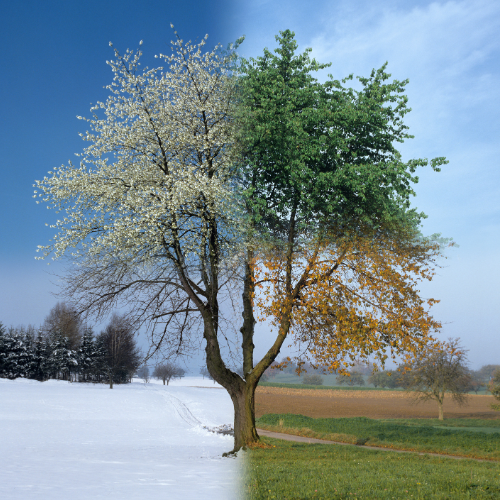
As winter slowly loosens its grip, Imbolc arrives as a quiet promise of what’s to come.
It’s a festival of light, hope, and new beginnings—a reminder that even in the coldest season, life is stirring beneath the surface.
Celebrated for centuries, Imbolc invites us to pause, reflect, and gently prepare for renewal.
Imbolc is traditionally celebrated from February 1st to February 2nd, marking the midpoint between the Winter Solstice (Yule) and the Spring Equinox (Ostara).
Astronomically, it falls about halfway through winter, when daylight is noticeably increasing, even if the weather still feels harsh.
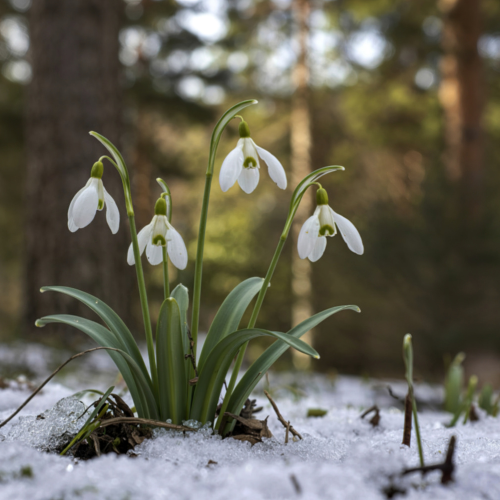
Imbolc is a festival of awakening and potential. While nothing may look different on the surface, the energy beneath is shifting.
Imbolc represents:
The return of the light.
Purification and renewal.
New beginnings and fresh intentions.
Hope after a long winter.
The first signs of spring—lambing season.
Melting snow.
The promise of fertile land ahead.
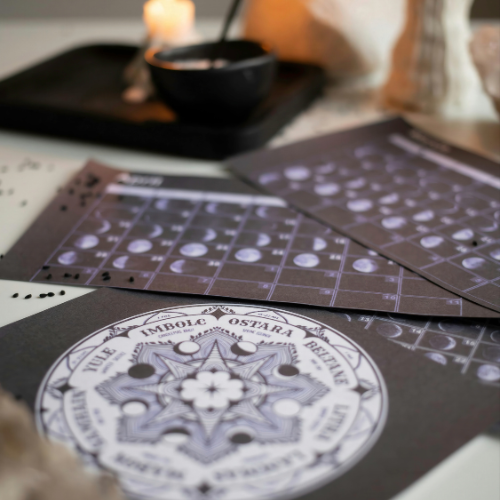
Imbolc is one of the eight sabbats or festivals in the Wheel of the Year, a seasonal cycle rooted in Pagan and earth-based traditions.
The Wheel includes:
Yule (Winter Solstice)
Imbolc
Ostara (Spring Equinox)
Beltane
Litha (Summer Solstice)
Lughnasadh
Mabon (Autumn Equinox)
Samhain
Within this cycle, Imbolc acts as a threshold—a gentle turning point from rest toward growth.
It bridges the introspection of winter with the outward energy of spring.
Imbolc is celebrated by:
Modern Pagans and Wiccans.
Druids and Celts.
Practitioners of earth-based spirituality
People interested in seasonal living and nature-aligned rituals.
Many people who celebrate Imbolc today do so in a spiritual, symbolic, or mindful way rather than strictly religious.
You don’t need elaborate rituals to honor Imbolc. Simple, intentional actions are often the most meaningful.
Imbolc is about planting seeds—energetically, not rushing results.
Here are a few ideas:
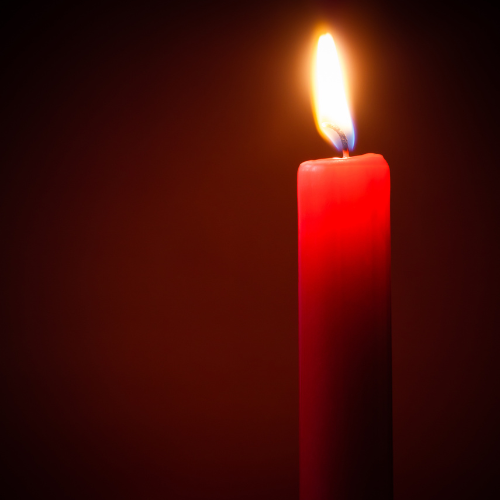
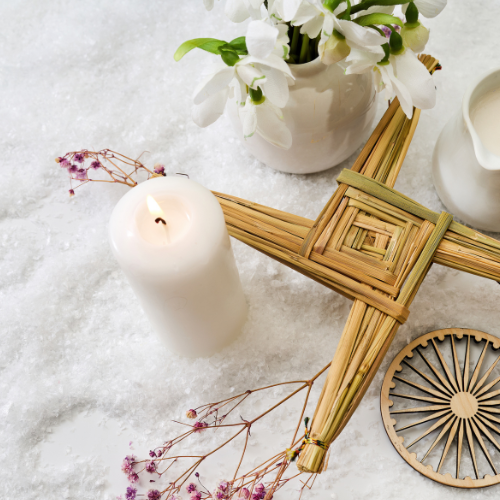
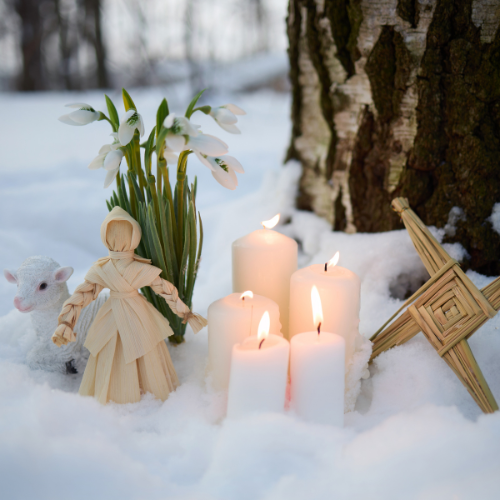
Light a candle to symbolise the returning light.
Clean your space (physical or digital) as a form of purification and cleansing.
Set intentions for the coming months.
Spend time in nature, noticing subtle seasonal changes.
Cook nourishing foods like soups, grains, or dairy.
Make a Brigid Cross.
Journal about what you want to grow in your life.
Create an Imbolc altar, or update your current altar.
I have long been a student and teacher of earth-based wisdom, and this passion and connection to rhythms, cycles and Mother Earth continues to grow.
In recent years, seasonal living has grown in popularity as people seek slower, more intentional ways of moving through life.
With trends and “buzz words” always whizzing around the wellbeing world, I encourage you to be discerning with the guides you choose, and the experiences they offer.
Modern life often disconnects us from natural rhythms. Seasonal living, in its simplest form encourages:
Rest when energy is low.
Action when energy rises.
Reflection during darker months.
Growth during lighter seasons.
Understanding of Yin (passive) / Yang (active) energetics.
Imbolc reminds us that growth doesn’t start with blooming—it starts with preparation.
Affirmations are a beautiful way to align with Imbolc’s energy of hope and renewal.
You might repeat them during candle-lighting, journaling, Yoga, meditation, or quiet reflection.
I welcome new beginnings with patience and trust.
Light is returning to my life.
I honuor rest as part of growth.
I am planting seeds for my future.
I release what no longer serves me.
Imbolc is most strongly associated with Brigid (or Bríghid), a Celtic goddess of fire and light, poetry and inspiration, healing, and smithcraft.
Brigid embodies creativity, protection, and renewal—perfectly aligned with Imbolc’s themes.
Imbolc is a soft, hopeful festival that invites us to notice the subtle shifts—both in nature and within ourselves.
It reminds us that even when progress feels slow, transformation is already underway.
By honoring Imbolc, we reconnect with the natural cycle of rest, renewal, and growth—and give ourselves permission to begin again, gently.
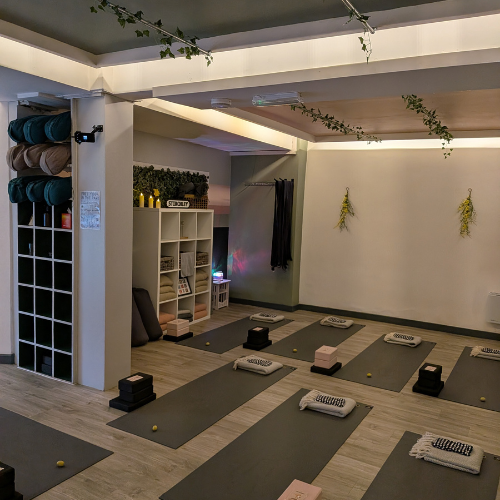
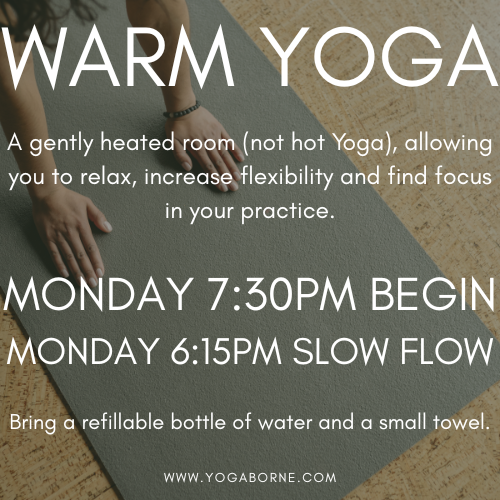
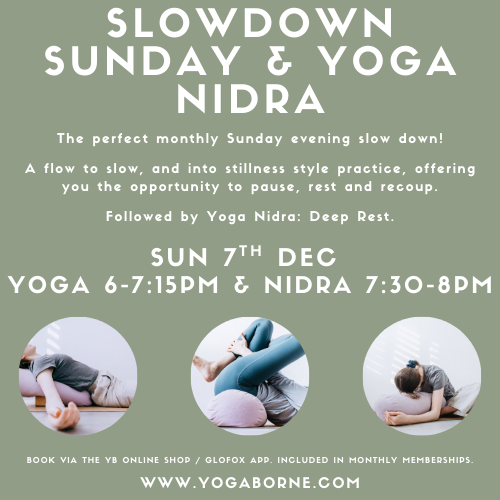
The schedule at Yoga Borne changes seasonally, and I also offer seasonal workshops and events.
These will be listed on the Yoga Borne online shop here.
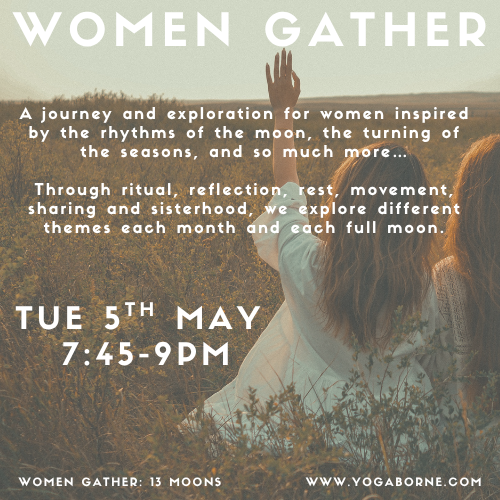
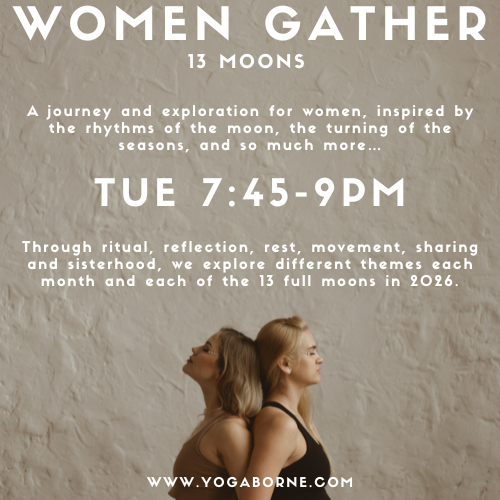
If you are a woman who is particularly interested in rhythms, seasons and cycles, why not join Women Gather.
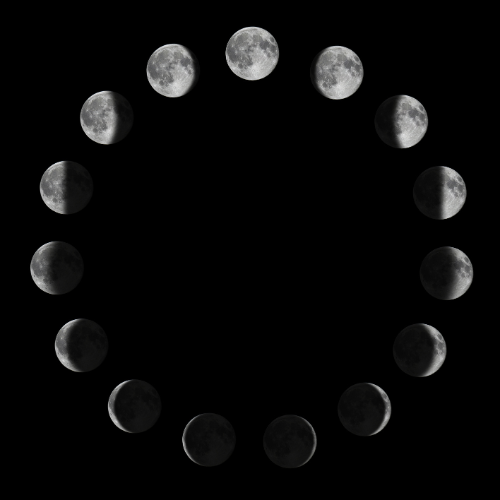
A year-long journey and exploration for women inspired by the rhythms of the moon, the turning of the seasons, and so much more.
Through ritual, reflection, rest, movement, sharing and sisterhood, we explore different themes each month and each moon.
Drop in to each month with it’s own theme. All months can be found via the Yoga Borne online shop here.
Commit to yourself and gather for the full year. More information here.
Blessed Imbolc!
Go gently, and may the seeds of intention planted blossom and bloom…