yoga philosophy

More About ... Ahimsa!

I have been thinking a lot about Ahimsa lately.

In a world that can seem very heavy and very unkind sometimes, Ahimsa can be something that we can think about as Yogis, share as teachers, and most importantly live by as humans.

Ahimsa is a Sanskrit (the language of Yoga), word that means non-violence or non harm.

It’s the practice of not causing harm in thought, word, or action.

In Yogic philosophy, ahimsa is the first Yama (ethical foundation) in Patanjali’s Yoga Sutras. That placement matters: it’s the ground everything else stands on.

Violence can be loud (war, cruelty, abuse) or subtle (self-criticism, neglect, indifference, disrespect, unconscious consumption). Ahimsa doesn’t begin with fixing the world, it begins with how you treat yourself, and each other.

Ahimsa asks us to notice all of it, but it starts with you…
You might take time to consider, or even journal:

  • How do you talk to yourself when you fail?

  • Do you override your body’s signals to rest?

  • Do you shame yourself into productivity?

  • Do you abandon your needs to be “good” or “liked”?

Practicing ahimsa toward yourself means:

  • Choosing honesty over self-attack.

  • Listening instead of forcing.

  • Letting yourself be human.


Ahimsa on your Yoga mat can look like:

  • Not pushing through pain to “prove” something.

  • Modifying without shame or judgement.

  • Resting when your nervous system asks for it.

  • Letting go of comparison.

Ahimsa offers a crucial lesson - strength doesn’t require violence. Growth doesn’t require force.

That lesson is portable. Off the mat, ahimsa becomes a daily inquiry: “Is this causing harm—to me, to others, to the planet?”

It doesn’t mean perfection or passivity. Sometimes non-violence requires firm boundaries, hard conversations, or saying no.


Practicing Ahimsa in life can look like:

  • Speaking truth without cruelty.

  • Disagreeing without dehumanizing.

  • Setting boundaries without guilt.

  • Consuming more consciously.

  • Pausing before reacting.

  • It’s not about being “nice.” It’s about being aware!

Simple ideas to practice ahimsa - small, real, human ways:

  • Replace self-criticism with curiosity.

  • Eat, move, and rest in ways that respect your body.

  • Listen to someone without planning your response.

  • Stop scrolling when your nervous system feels fried.

  • Choose words that don’t escalate harm.

  • Forgive yourself faster.

  • Make one choice a day that reduces harm—even slightly.

Ahimsa is practiced in moments, not grand gestures.

Why does it matter so much right now?

We are unfortunately living in a time of chronic stress and nervous-system overload, polarization and dehumanization, environmental harm and much more.

Violence today isn’t only physical—it’s systemic, emotional, digital, and internalized.

Practicing ahimsa can interrupt that cycle.

When you practice non-violence you stop passing pain forward, you slow reactivity, you create space for empathy and you model another way of being.

It starts from you, and it ripples.


Ahimsa doesn’t ask us to be perfect. It also does not ask us to be passive, and should not be confused with passivity and lack of action.

It asks us to be awake and aware - to ourselves, and the world around us.

When there’s violence, political chaos, injustice, fear—practicing ahimsa doesn’t mean pretending everything is fine or staying soft at all costs.

It means learning how not to let fear turn you into something you don’t want to become.

Start with nervous-system Ahimsa:

  • Limit doom-scrolling.

  • Taking breaks from constant news without guilt.

  • Breathing before reacting.

  • Letting yourself grieve what’s happening.

Ahimsa allows for:

  • Clear boundaries.

  • Saying “this is not okay.”

  • Protest, resistance, and refusal.

  • Anger that doesn’t turn into hatred.

The key question might be - “can I oppose harm without becoming harmful myself?”

That’s incredibly powerful—and incredibly difficult.

When life feels overwhelming and scary, how you show up in small relationships matters deeply.

Ahimsa is a long game, violence feels fast. Ahimsa works slowly—but it lasts.

Remember - you are allowed to protect yourself, you are allowed to be angry, you are allowed to take breaks.

Ahimsa doesn’t ask you to feel safe all the time, perhaps it more so asks you to not let fear and hate become your teacher.

More about… Mantra.

What is a Mantra?

In yoga, a mantra is a sound, syllable, word, or group of words that are considered capable of creating transformation.

Mantras are often used during meditation, breathing exercises, and physical postures to focus the mind, deepen concentration, and align the practitioner with a specific intention.

The word mantra comes from the Sanskrit root words:

"Man" which means "mind"

"Tra" which means "tool" or "instrument"

Thus, mantra literally translates to "a tool for the mind" or "instrument of thought."

Mantras are considered powerful vibrations that affect not only the mind but also the energy fields of the body and the environment. They can be used to channel thoughts, focus on a particular energy, and develop spiritual awareness.

Using Mantra.

Mantras can be used in a variety of ways.

1. Meditation: Repeating a mantra during meditation helps to keep the mind focused, preventing it from wandering.

2. Breathwork (Pranayama): Some mantras are coordinated with breath, guiding inhalation and exhalation patterns.

3. Chanting: Chanting a mantra can harmonize your body and surroundings, creating inner peace and a greater sense of connection to self, others, and the outside world.

4. Affirmation: Mantras are sometimes used like affirmations, repeated to help manifest intentions or positive states of mind.

5. Energy Healing: Specific mantras are said to invoke different energies, which can support healing, balance, and emotional well-being. For example, there are specific mantras associated with Reiki healing that can help to enhance and “super charge” the healing.

** EXCITING NEWS - Reiki Healing will be coming to the studio in 2025 **

Is Mantra Cultural Appropriation?

Cultural appropriation refers to adopting elements of a culture in a way that disrespects or commodifies it.

Using mantras respectfully in yoga isn't necessarily cultural appropriation, but mindfulness is key. To avoid appropriation, consider the below.

Respect the Origins: Understand the historical and spiritual significance of the mantra, and recognize its cultural roots.

Seek Guidance: If you're unsure, consult a knowledgeable teacher or source who is rooted in the tradition.

Avoid Commercialization: Avoid using mantras superficially or in a way that strips away their spiritual context.

Sanskrit is a beautifully complex language. I took a short course in it and it is definitely something I would like to revisit. It is a process of continued learning, as is yoga, and life itself!

Examples of Mantras in Yoga.

Om (Aum): The most universal and foundational mantra, representing the sound of the universe and the vibration of creation.

So Hum: Translates to "I am that," used to recognize one's connection to the universe.

Om Shanti Shanti Shanti: A mantra for peace, used to cultivate inner peace and spread peace outward.

Mantras for Autumn / Winter.

As the seasons change, you can use mantras to align with the natural energy cycles, which is a really beautiful practice. Some examples are below.

Autumn: "Om Gam Ganapataye Namaha" – a mantra for new beginnings, as autumn is often a time for letting go and setting intentions.

Winter: "Om Namo Narayanaya" – invoking peace and calmness during the more introspective, restful winter months.

Chanting & Mantra.

Chanting is an important practice in yoga that involves repeating a mantra aloud, often in a rhythmic and melodic fashion.

Chanting mantras enhances their vibrational power and allows the practitioner to physically and energetically experience the mantra's effects.

The repetitive sound can create a meditative state, calming the mind and aligning it with the deeper essence of the mantra.

Chanting is not a part of yoga that is necessarily incorporated much in the West, but it is such a powerful practice. You might like to look at Kirtan, and local Kirtan groups if chanting / singing / use of voice is something that resonates with you.

What is Japa?

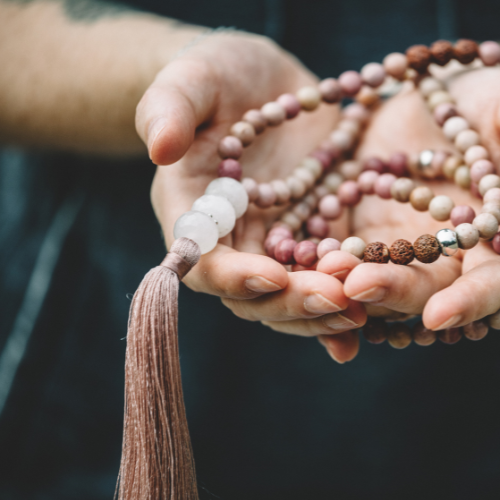
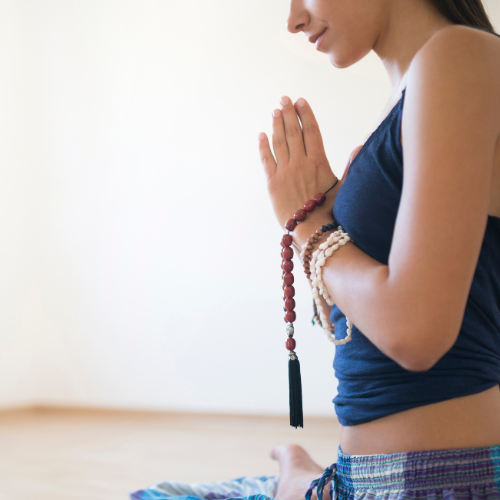
Japa is the meditative practice of repeating a mantra, usually with the help of a mala (prayer beads) to count the repetitions.

Japa can be done silently or aloud, and it helps to deepen one's connection with the mantra.

There are typically 108 beads in a mala, and completing one cycle of 108 repetitions is considered highly beneficial.

What are Seed / Bija Mantras?

Bija (seed) mantras are single-syllable sounds that are believed to contain the essence of specific energies or elements in the universe.

These seed sounds are considered particularly potent because they carry a concentrated vibrational frequency.

Om: The primordial sound, representing the essence of the universe.

Lam: Root chakra, grounding and security.

Vam: Sacral chakra, creativity and emotions.

Ram: Solar plexus chakra, power and confidence.

Yam: Heart chakra, love and compassion.

Ham: Throat chakra, communication and truth.

Om (Aum): Crown chakra, spiritual connection.

These Bija mantra are sometimes chanted when moving through an asana practice, for example traditional sun salutations (Surya Namaskar).

Mantras can be integrated into your yoga practice and also become part of daily life!

In Asana: Repeat a mantra in your mind as you hold poses to stay present and focused.

In Meditation: Use a mantra to anchor your mind during seated meditation.

In Breathwork: Synchronize your mantra with your breathing for enhanced focus.

Daily Affirmations: Choose a mantra to repeat throughout the day, especially during challenging times.

Rituals: Start or end your day with a mantra as part of your personal ritual for mindfulness or spiritual practice.

Incorporating mantras into your routine can cultivate mindfulness, intention, and connection both on and off the mat.

Some of our teachers will explore mantra in their weekly practices with you. We also explore these during workshops and Day Retreats.

Take a look at the wonderful workshop and our Hygge Day Retreat coming up via the Yoga Borne online shop.

Just click here!