blog

More About ... Cleansing with Sage!

Owning a studio space means I regularly cleanse the space, as it’s a hub of energy!

My friend Becky has drum cleansed the space in the past, I cleanse with chants, chimes, bells, incense, and most recently a beautiful bunch of sage.

Neither cleansing rituals nor sage are new to me, but it got me to thinking about the trend of “smudging” and the cultural considerations associated with this.

So, I thought I would share a little more…
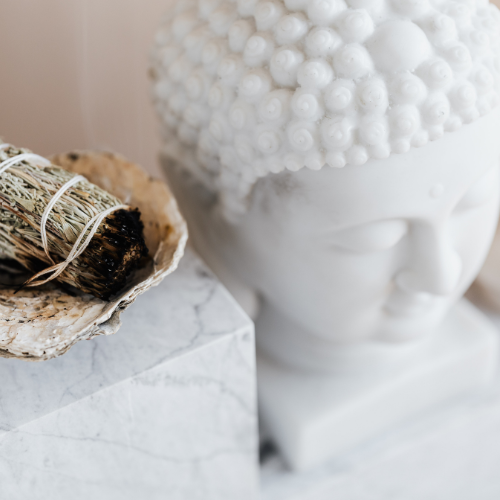
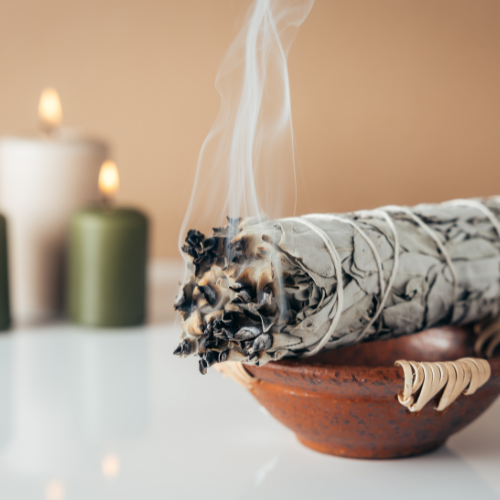
Using sage for cleansing can cross into cultural appropriation when it borrows from specific Indigenous spiritual traditions—especially without understanding, respect, or permission.

This can be a sensitive topic.

What many people call “smudging” isn’t just a generic ritual—it’s a sacred ceremonial practice in various Native American cultures.

It’s tied to specific teachings, community roles (often led by elders), cultural and spiritual meaning, not just “energy cleansing.”

When people outside those cultures adopt it casually (e.g. as a trendy wellness habit), it can be seen as cultural appropriation.

This is troublesome as it strips away its meaning, commercialises something sacred (an ongoing issue in the wellness world), and it can also contribute to overharvesting of plants like white sage.
1. Smudging vs. burning herbs.

Smudging is a cultural/religious ceremony from Indigenous traditions, whereas burning herbs/incense is generally something many cultures have done in different ways.

If you’re copying a specific Indigenous ritual and calling it “smudging,” that’s where it could be considered appropriation, as opposed to appreciation.

2. The type of sage.

White sage is sacred to certain Indigenous groups and has been overharvested. Garden sage or other herbs don’t carry the same cultural weight. Why not grow your own herb garden?

3. Intent vs. impact.

Even if your intention is harmless (e.g., relaxation, spirituality), the impact can still be problematic if it ignores the origins and treats a sacred practice as an aesthetic “trend”.
Are there more respectful alternatives?

In short, YES!

If you like the idea of cleansing your space, you could use incense from traditions you understand or are part of, burn herbs that aren’t culturally restricted or that you grow yourself.

There are also plenty of non-smoke methods. I mentioned above about sound, simply cleaning a space with intention is a form of cleansing, opening a window or door and letting fresh air in the space.

What is important is that we don’t just jump on the bandwagon of another wellness “trend” but if we choose to practice something, we learn about the cultural origins before adopting anything.

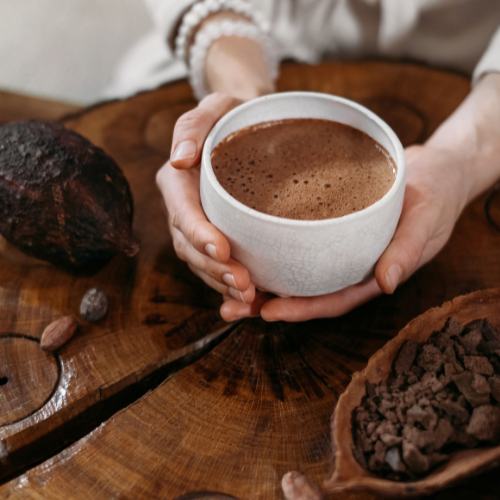
A GREAT example of this is the rise in popularity of Cacao / Cacao Ceremonies.

Practitioners without training, without understanding of the culture and history of Cacao, not offering ceremonial grade Cacao, and simply offering it as an add-on “heart opener”.

This could be a whole other blog post!
Everyone will have their own opinion, and there can be conflicting information out there.

It is up to us to do our own research, and to sit with what feels right, authentic, and true for us.

A balanced way to think about it could be; it’s not that no one outside Indigenous cultures can ever burn sage, BUT avoid calling it “smudging” unless you’re part of that tradition, be mindful about sourcing (don’t support exploitative harvesting), enjoy growing your own, and approach with awareness rather than following wellness fads and “trends.”
More About ... Ahimsa!

I have been thinking a lot about Ahimsa lately.

In a world that can seem very heavy and very unkind sometimes, Ahimsa can be something that we can think about as Yogis, share as teachers, and most importantly live by as humans.

Ahimsa is a Sanskrit (the language of Yoga), word that means non-violence or non harm.

It’s the practice of not causing harm in thought, word, or action.

In Yogic philosophy, ahimsa is the first Yama (ethical foundation) in Patanjali’s Yoga Sutras. That placement matters: it’s the ground everything else stands on.

Violence can be loud (war, cruelty, abuse) or subtle (self-criticism, neglect, indifference, disrespect, unconscious consumption). Ahimsa doesn’t begin with fixing the world, it begins with how you treat yourself, and each other.

Ahimsa asks us to notice all of it, but it starts with you…

You might take time to consider, or even journal:

  • How do you talk to yourself when you fail?

  • Do you override your body’s signals to rest?

  • Do you shame yourself into productivity?

  • Do you abandon your needs to be “good” or “liked”?

Practicing ahimsa toward yourself means:

  • Choosing honesty over self-attack.

  • Listening instead of forcing.

  • Letting yourself be human.


Ahimsa on your Yoga mat can look like:

  • Not pushing through pain to “prove” something.

  • Modifying without shame or judgement.

  • Resting when your nervous system asks for it.

  • Letting go of comparison.

Ahimsa offers a crucial lesson - strength doesn’t require violence. Growth doesn’t require force.

That lesson is portable. Off the mat, ahimsa becomes a daily inquiry: “Is this causing harm—to me, to others, to the planet?”

It doesn’t mean perfection or passivity. Sometimes non-violence requires firm boundaries, hard conversations, or saying no.


Practicing Ahimsa in life can look like:

  • Speaking truth without cruelty.

  • Disagreeing without dehumanizing.

  • Setting boundaries without guilt.

  • Consuming more consciously.

  • Pausing before reacting.

  • It’s not about being “nice.” It’s about being aware!

Simple ideas to practice ahimsa - small, real, human ways:

  • Replace self-criticism with curiosity.

  • Eat, move, and rest in ways that respect your body.

  • Listen to someone without planning your response.

  • Stop scrolling when your nervous system feels fried.

  • Choose words that don’t escalate harm.

  • Forgive yourself faster.

  • Make one choice a day that reduces harm—even slightly.

Ahimsa is practiced in moments, not grand gestures.

Why does it matter so much right now?

We are unfortunately living in a time of chronic stress and nervous-system overload, polarization and dehumanization, environmental harm and much more.

Violence today isn’t only physical—it’s systemic, emotional, digital, and internalized.

Practicing ahimsa can interrupt that cycle.

When you practice non-violence you stop passing pain forward, you slow reactivity, you create space for empathy and you model another way of being.

It starts from you, and it ripples.


Ahimsa doesn’t ask us to be perfect. It also does not ask us to be passive, and should not be confused with passivity and lack of action.

It asks us to be awake and aware - to ourselves, and the world around us.

When there’s violence, political chaos, injustice, fear—practicing ahimsa doesn’t mean pretending everything is fine or staying soft at all costs.

It means learning how not to let fear turn you into something you don’t want to become.

Start with nervous-system Ahimsa:

  • Limit doom-scrolling.

  • Taking breaks from constant news without guilt.

  • Breathing before reacting.

  • Letting yourself grieve what’s happening.

Ahimsa allows for:

  • Clear boundaries.

  • Saying “this is not okay.”

  • Protest, resistance, and refusal.

  • Anger that doesn’t turn into hatred.

The key question might be - “can I oppose harm without becoming harmful myself?”

That’s incredibly powerful—and incredibly difficult.

When life feels overwhelming and scary, how you show up in small relationships matters deeply.

Ahimsa is a long game, violence feels fast. Ahimsa works slowly—but it lasts.

Remember - you are allowed to protect yourself, you are allowed to be angry, you are allowed to take breaks.

Ahimsa doesn’t ask you to feel safe all the time, perhaps it more so asks you to not let fear and hate become your teacher.

Move Through May ... Sukhasana (Easy Pose)

“Move Through May” is a month of movement, available completely FREE on Yoga Borne YouTube.


Each day through May, we will offer a short video, exploring a different Asana (shape).

How to, demonstrations, hints and tips, options and variations to make it work for you and your body!


Day 1 (available on 1st May), is an introduction, take a look
here.

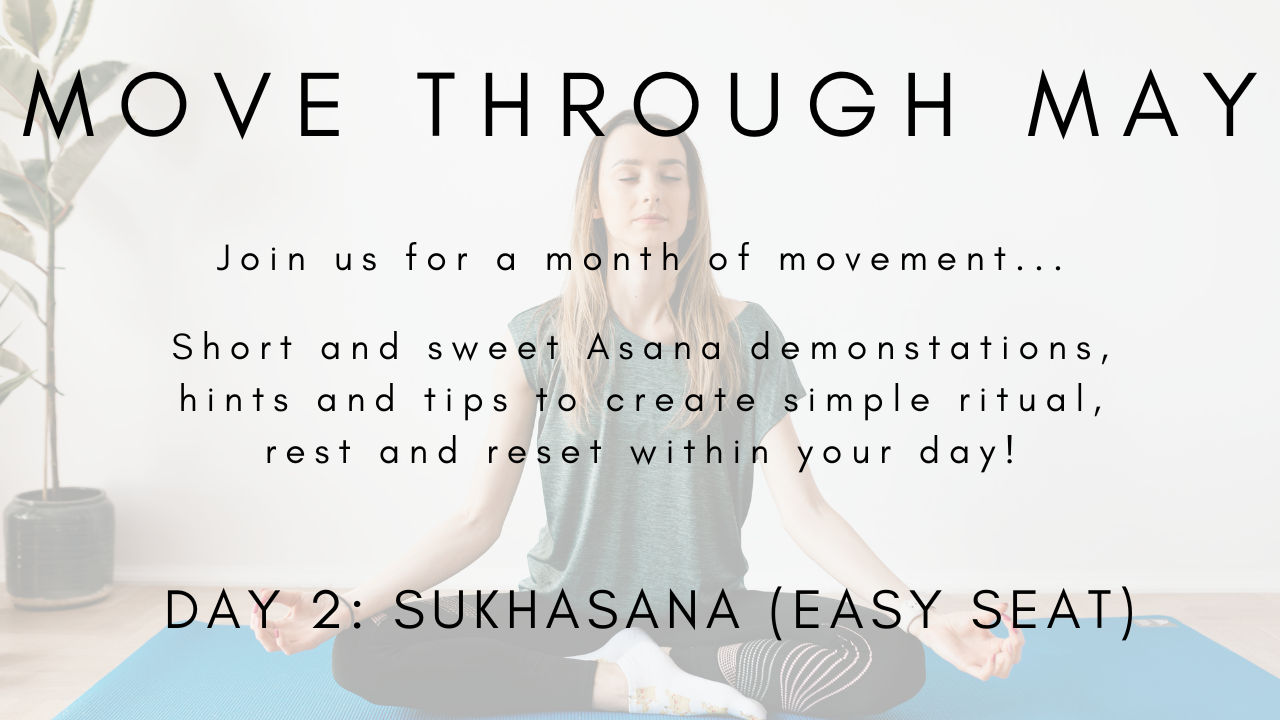
Day 2 is Sukhasana (available on 2nd May), and we’ve put together some information about this Asana below.


Sukhasana (Easy Pose) is a foundational seated posture in Yoga.

The word Sukhasana comes from Sanskrit language:

“Sukha” = ease, comfort, happiness

“Asana” = posture or seat

So, Sukhasana literally means “comfortable or easy sitting posture.”


Don’t worry if it’s not instantly comfortable, or easy for you - hopefully “Move Through May” will offer some hints and tips for you to find your way!

Sukhasana has its roots in ancient Indian Yoga traditions described in texts like the Yoga Sutras of Patanjali. While the text doesn’t list poses in detail, it emphasizes that a posture for meditation should be steady and comfortable (“sthira sukham asanam”), which aligns with Sukhasana.

Difficulty level: Beginner-friendly.

Body position: Cross-legged, spine upright, relaxed shoulders, hands resting comfortably.

Benefits:

  • Encourages calmness and mental clarity.

  • Improves posture and spinal alignment.

  • Opens hips gently.

  • Stimulates the leg meridians (energy pathways).

Sukhasana is essentially sitting cross-legged in a steady, upright position, with your head, neck, and spine tall but not rigid.

It’s often used at the beginning of a practice to arrive and ground, and for meditation and concentration practices.

Head over to Day 2 of Move Through May for more hints and tips!

Available on 2nd May - just click here!

Creating & Maintaining Balance in Spring...

Spring is a season of renewal—longer days, fresh growth, and a sense of awakening.

In Traditional Chinese Medicine (TCM), spring is associated with the Wood element, the Liver, and the smooth flow of Qi (energy).

It’s a time of expansion, vision, and movement—but without balance, it can also bring irritability, stress, and stagnation.

This is the perfect moment to realign your body and mind, embracing practices that support balance.

Understanding Spring Through Yin & Yang

Spring represents the shift from Yin (winter’s inward, still energy) to Yang (summer’s outward, active energy).

Yin is cooling, nourishing, introspective, lunar.

Yang is warming, energising, expressive, solar.

In spring, Yang begins to rise—but balance is key.

Too much Yang can lead to restlessness or frustration, and even burnout while too much Yin may leave you feeling sluggish and lacking motivation and drive.

So what’s the answer? Encourage gentle movement and growth without forcing or overwhelming yourself!

Supporting Liver Qi (energy) in Spring

In TCM, the Liver governs the smooth flow of Qi and emotions.


When Liver Qi is balanced, you might feel:

  • Calm yet motivated.

  • Creative and inspired.

  • Gently energised.

When it’s stagnant, you may notice:

  • Irritability or mood swings.

  • Tight muscles.

  • Fatigue or digestive discomfort.

Ways to support Liver Qi:

  • Stretch daily.

  • Eat light, fresh, green foods.

  • Avoid excessive alcohol and heavy, greasy meals.

  • Express emotions rather than suppress them.


According to TCM, updating our diet with the change of the seasons is key to overall health and wellbeing.

Yoga for Spring Balance

Spring calls for both Yin and Yang within your Yoga practice.

Flowing movement to awaken and energise the body , as well as stillness and surrender to support rest and digestion. It’s all about balance, and both support the flow of Qi.

Yoga Borne offers a balanced selection of practices seasonally.

Join us for FLOW, ENERGISE and STRENGTH for more Yang.

Warm it up with BEGIN WARM and our new class HEATED HATHA.

Slow it down with SLOW FLOW, YIN YOGA and our new class SLOW SUNDAY.

Even one or two classes per week can help you feel more aligned and balanced in body and mind.

Read the class descriptions here.

Book a class here.

Meditation & Mindfulness

As energy rises in spring, the mind can become busy and scattered. Meditation helps ground and centre you.

Simple practices:

  • Breath awareness (5–10 minutes daily).

  • Walking meditation outdoors.

  • Mindful pauses throughout the day.

Head over to Yoga Borne YouTube for hundreds of FREE practices, including a whole month of short and sweet meditations - “Meditate Through March.”

Just click here.

Get Outside & Connect with Nature

Nature is your greatest ally in spring!

Take walks in green spaces, sit in the sun and breathe deeply - even for just a few minutes each day.

Notice new growth, colours, and sounds around you.

This connection helps regulate your nervous system and naturally aligns your internal rhythms with the season.

Why not join us as we take Yoga out into nature? And better yet - it’s FREE!

For many years now we have led the way in taking Yoga into nature and brining the community together through mindful movement, and this year will be no different.

Earth Day Yoga 2026 @ Cotteridge Park

Tue 21st April

6pm

More info here.

We will also have a full schedule during Summer of Yoga in the Park, plus will be sponsoring and offering FREE Mindful Movement & Meditation for the 3rd year at CoCoMAD.

Get creative in Spring

After the dormancy of Winter, Spring can often spark our creativity, and we have the perfect afternoon workshop to explore this!

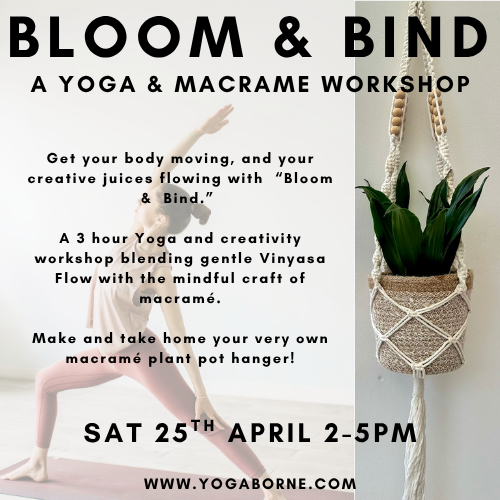
“Bloom and Bind” is a 3 hour Yoga & Creativity Workshop blending a gentle Vinyasa Flow with the mindful craft of macramé. 

‍We will start the workshop with a FLOW practice to awaken body and mind, and get our creative juices flowing!

‍Settle into Savasana, and wind down before crafting time!

‍A short breathwork and intention setting practice follows.

‍Light refreshments will be available during a short break as we set up the creative space for you.

‍Then, learn how to create your own macramé plant hanger, as you will be invited to weave your intentions for Spring into each thread of your creation.

No experience of Yoga or macramé is necessary.

‍ ‍‍All Yoga and creative materials will be provided and you will be able to take your own one-of-a-kind plant hanger home with you at the end of the day!

Yoga and creativity are a wonderful combination for mind, body and soul.

Spaces are limited. For more information and booking, just click here.

A Cooling Spring Drink (Liver-Loving Recipe)

Cucumber, Mint & Lemon Refresher

Ingredients:

  • 1/2 cucumber (sliced).

  • Handful of fresh mint leaves.

  • Juice of 1/2 lemon.

  • 500ml water (still or sparkling to your taste).

  • Optional: teaspoon of honey.

Instructions:

  • Add cucumber and mint to a jug.

  • Pour over water and lemon juice.

  • Let it infuse for 10–15 minutes.

  • Add honey if desired and enjoy chilled.

Benefits:

  • Hydrating and cooling.

  • Supports digestion.

  • Gently aids Liver function.

Top Tips for Balance in Spring

  • Declutter your space → Clears mental and emotional stagnation.

  • Wake up earlier with natural light → Align with seasonal rhythms.

  • Move your body daily → Gentle stretching for 10 minutes absolutely counts!

  • Eat seasonally → Think greens, sprouts, and fresh herbs.

  • Avoid overcommitting → Growth should feel natural, not forced.

  • Stay flexible → Physically and emotionally.

Spring is an invitation—not a demand.

It asks you to open, expand, and grow, but in a way that feels aligned, sustainable and balanced for you.

By combining the wisdom of Traditional Chinese Medicine, the balance of Yin and Yang, and practices like Yoga, meditation, and Mindful Living, you can move through this season feeling grounded, gently energised, and in harmony with the world around you.

Take it one step at a time—just like nature does!

Nurturing Wellbeing in November...

As November settles in, the shorter days and cooler temperatures can sometimes feel like a shock to the system.

With the festive season just around the corner, it’s the perfect time to pause, reset, and take care of your mental, physical and spiritual wellbeing.

As always, here at Yoga Borne we are here to support you with Yoga, Pilates and an array of Holistic Wellbeing offerings.

Keep reading for our top tips to stay balanced, refreshed , and prepared as winter approaches!

Supporting Your Mental Health as the Days Grow Darker.

  • Embrace natural light.

With daylight hours shrinking, exposure to natural light becomes essential. Try to get outside during the brightest part of the day—whether that’s a morning walk, a lunchtime stroll, or even sitting near a window while you work.

  • Stay connected.

Colder weather can tempt us to stay indoors and withdraw, but social connection is a powerful mood booster, and scientifically proven to help our wellbeing. Schedule regular check-ins with friends and family, join or keep up your classes, and enjoy being part of a community!

The picture below is from a Yoga Borne Autumn Retreat.

  • Practice mindfulness.

November naturally encourages a slower pace. Use this as an opportunity for mindfulness—spend a few minutes each day focusing on your breath, journaling, or practicing gratitude. These small practices can help ease seasonal stress.

Check out Yoga Borne YouTube here for a whole host of meditations and more!

  • Be aware of signs of seasonal low mood.

If you notice persistent fatigue, irritability, or loss of interest in activities, you may be experiencing symptoms of Seasonal Affective Disorder (SAD). Reaching out to a GP or mental health professional early can make a meaningful difference. Also consider reaching out to those you trust for support.

2. Taking Care of Your Physical Wellbeing.

  • Keep moving.

Even minimal physical activity can improve energy levels and mood. Consider swapping long outdoor sessions with shorter, more frequent walks, indoor fitness routines, or online classes. The key is consistency rather than intensity.

Yoga Borne offers classes 7 days a week in our warm and cosy studio, plus available LIVE online via Zoom!

  • Fuel your body with winter-friendly nutrition.

Comfort food season doesn’t have to mean unhealthy eating. Build meals around warming soups, seasonal vegetables, whole grains, leafy greens and immune-supporting foods.

Cacao is a mood and immunity booster, and we have a Cacao Ceremony coming up on 22nd November. Click here for more info and booking!

  • Support your immune system.

As cold and flu season sets in, consider small daily habits that help protect your health: staying hydrated, getting adequate sleep, washing hands regularly, and taking vitamin D supplements if needed.

  • Prioritise rest.

With darker evenings, your body naturally craves more downtime. Listen to it! Creating a calming bedtime routine can help improve sleep quality and overall resilience. Evening Yoga can help to wind the body and mind down ready for a good night sleep.

Sound Healing is a wonderful way to relax, and our Autumn Sound Healing session is coming up on Sunday 23rd November. Click here for more information.

On Sunday 7th December we have our monthly extended class - Slowdown Sunday. The perfect end to your weekend, and start to a new week! Click here for more information.

Yoga Nidra is also an amazing practice to prioritise rest, as it involves no movement. Join us most Sunday evenings LIVE online 7:30pm.

3. Preparing for the UK Holiday Season.

  • Plan ahead to reduce stress.

From gift shopping to meal planning, early organisation can help prevent December overwhelm. Make lists, set budgets, and break tasks into manageable steps to keep the season enjoyable rather than exhausting.

  • Create realistic expectations.

The holidays often come with so much pressure—from hosting duties to social commitments. Give yourself permission to set boundaries, simplify traditions, and say no when needed. No is a full sentence!

  • Focus on meaningful moments.

Rather than getting caught up in the hustle, prioritise activities that genuinely bring joy—cosy evenings in, charity volunteering, or reconnecting with loved ones.

  • Balance indulgence with wellbeing.

Festive treats are part of the fun, but mindful enjoyment can help you stay balanced. Try alternating rich meals with lighter options, keep alcohol in moderation, and stay hydrated throughout celebrations.

November is a transitional month—an invitation to slow down, reflect, and prepare for both winter and the upcoming festive season.

By taking small but intentional steps to support your mental and physical health, you can embrace the colder months with greater ease, energy, and balance!

Embracing Autumn...

Embracing Autumn: Adjusting Mind, Body, and Spirit to Seasonal Change

As the air turns crisp and the days grow shorter, autumn invites us to slow down and align ourselves with nature’s rhythm.

Seasonal living means tuning into these subtle shifts and adjusting our lifestyles to support balance in body, mind, and spirit.

Autumn is a time of transition—of letting go, grounding, and preparing for the stillness of winter.

The cooler temperatures and shorter days can impact our energy levels and immunity.

This is the season to focus on warmth and nourishment.

Layer your clothing, keep your home cosy, and prioritize rest where possible.

Gentle but consistent movement, like walking outdoors or practicing Yoga, helps keep circulation strong and prevents stiffness as the body adapts to the chill.

Autumn often stirs emotions of change and reflection. Just as trees shed their leaves, we can release what no longer serves us.

Journaling, mindfulness practices, meditation or creative outlets can help process emotions and maintain mental clarity.

It’s also common to feel a dip in mood as daylight lessens—creating intentional moments of joy, connecting with loved ones, and seeking natural light can all be uplifting practices.

Autumn can be deeply symbolic: a reminder of cycles, impermanence, and the beauty of letting go.

Spiritually, it calls for grounding rituals. Yoga, daily meditation, gratitude practices, or spending quiet time in nature can foster a sense of peace and alignment with the season’s energy.

Ways to Stay Well in Autumn

  • Maintain a regular sleep routine to sync with earlier sunsets.

  • Hydrate and moisturise to counteract dry air.

  • Take walks in nature to absorb the vibrant colors and fresh air.

  • Strengthen immunity with herbal teas, vitamin-rich foods, and warm broths.

Yoga and Meditation for Autumn

Autumn aligns with grounding and balancing practices in Yoga.

SLOW FLOW and mindful YIN (STRETCH) practices are lovely for Autumn, as we slow down and energy turns inwards.

In contrast, balance with heat building practices such as FLOW and ENERGISE. Plus, twice a week we have WARM YOGA in the studio!

Meditation in Autumn can centre around gratitude, mindfulness, and visualization—imagining releasing old energies like falling leaves, making space for renewal, and new beginnings.

According to Traditional Chinese Medicine (TCM) and Five Element Theory, Autumn is connected to the lungs and large intestine. Deep breathing practices and supporting the respiratory system are important, and allowing ourselves to emotionally and mentally release what no longer serves us will feel beneficial.

Foods for Autumn

Autumn calls for hearty, warming foods that nourish deeply. Root vegetables, squashes, pumpkins, apples, pears, and warming spices like cinnamon and ginger align beautifully with the season.

Soups, stews, and baked dishes provide comfort and grounding energy.

Herbal teas such as chai, ginger, or rooibos support digestion and immunity.

Below we have linked a few Autumn recipes for you to try out and enjoy!

Butternut squash soup.

Vegetarian lentil cottage pie.

Baked apples.

Living seasonally is an act of harmony with nature, and can help us to maintain and improve physical, emotional, and spiritual wellbeing.

In the Western world we are often very disconnected from nature, and in essence ourselves.

Yoga Borne offers special seasonal and lunar inspired workshops and experiences for you to enjoy and rekindle this connection.

We have some wonderful offerings coming up in October.

Just click the link to find out more info and book!

Movement is Medicine / Friday 3rd / 7:30pm

Women Gather: Hunters Moon Edition / Tuesday 7th / 8pm

Reiki Healing Experience / Sun 19th / 1pm

Reiki Healing Experience / Sun 19th / 2:30pm

Crystal Bowl Sound Healing: Autumn / Sun 19th / 6pm

Slowdown Sunday: Autumn / Sun 26th / 6pm

Yoga Nidra (in studio) / Sun 26th / 7:30pm

Plus, the start of November brings a special workshop which has been a staple for the past few years, Samhain ( Halloween). This will be a wonderful afternoon of ritual and rest, with an optional creative activity. Find out more by clicking here.

Wishing you an abundant and blessed Autumn ahead!

A Short Autumn Ritual...

Autumn Blessings, Friends!

The Wheel of the Year has turned, and we welcome the cooler and darker months ahead.

You can read more about Autumn Equinox, often called Mabon, on a previous Borne Blog here.


This year my offering to you is a short and simple Autumn Equinox ritual and chant that you might like to use to honour this transitional time.

Autumn Equinox Ritual

1. Prepare a small altar or space with autumn symbols: a candle (gold, orange, red, brown), a bowl of water, an apple, and something that represents balance (like two stones of different colors).

2. Ground yourself with a few deep breaths.

3. Light the candle, saying:

“I welcome the turning of the year. Light and dark, day and night, now stand as equals.”

4. Hold the apple, and reflect on gratitude for your harvest (what you’ve achieved or received this year).

5. Place the two stones side by side, saying:

“Balance within, balance without. I walk the path of harmony.”

6. Close the ritual by eating a piece of the apple or pouring water to the earth as an offering.

Autumn Equinox Chant

(Repeat softly, three times or as many as you feel right):

“Sun to shadow, light to dark,

Balance strikes a sacred mark.

Harvest gathered, spirits near,

I honor the turning of the year.”

Time to slow down?

Autumn Equinox beckons us to find a moment to pause, and Autumn itself is a time to start to slow down.

This Sunday 28th September we are offering a special 75 minute extended practice “Slowdown Sunday” which will be a Yang to Yin, Flow to Slow approach. Ending in a lovely snuggly relaxation.

This is available to join in the studio and LIVE online via Zoom.

For more information click here.

Need some deep rest?

Yoga Nidra, often known as “Yogic Sleep” is a type of meditation practice offering the body deep rest.

It is accessible and inclusive, as there is little to no movement involved.

This class is available online weekly, and once a month we will be bringing it into the studio.

This is your opportunity to join us in our serene Stirchley Studio, with all equipment provided, including blankets, cushions, eye pillows.

Practiced in a candlelit room, lie down and simply relax. (The class will also be available online).

You deserve a Sunday evening of rest and recuperation once a month, minimum!

So why not join us for both Slowdown Sunday and Yoga Nidra?

As a thank you, Yoga Nidra is 50% off if you join Slowdown Sunday - just email us to get your discount!

(Please don’t book and then ask for a discount as we won’t be able to offer you a refund).

Book the September in studio class here.

Book the online class (and all other classes) here.

The studio is sooo cosy in Autumn - fairy lights, Autumn wreaths, candlelit classes, and of course herbal teas on tap and a fully equipped as always.

For slower paced classes you might like to wear extra layers, and a fluffy pair of socks is always a great idea!

We recommend balancing your class schedule with a mix of Yin and Yang - punchier paced, flow or Hatha style classes mixed with slower flows, and of course our dreamy Yin-spired STRETCH and STRETCH & REST classes (the latter of which includes a short Yoga Nidra to end.

Stay warm, stay well, and we look forward to guiding you through the next season!

More About... First Harvest!

The golden light of Late Summer warms the land and the first grains are gathered from the fields, it is the time of First Harvest, often referred to as Lammas or Lughnasadh.

This sacred time is a festival of gratitude, transformation, and the cyclical dance of life and death.

Falling around August 1st, this Sabbat (celebration) marks a pivotal point on the Wheel of the Year - the waning of Summer as we begin the descent into Autumn.

Origins of Lughnasadh

Lughnasadh (pronounced LOO-nah-sah or LOO-nahs) is rooted in Celtic tradition, named after the Irish god Lugh, a solar deity and master of many skills.

This was a time of community gatherings, trial marriages, athletic contests (similar to the Olympics), and honoring the sacred relationship between the land and its people.


Origins of Lammas

Lammas (short for Loaf Mass) has Anglo-Saxon and Christian origins, emerging in medieval England as a Christianized harvest festival.

On this day, the first loaves of bread made from the new grain were brought to church to be blessed, symbolizing the sanctity of the harvest.

While it shares the agricultural theme of Lughnasadh, Lammas leans more heavily into Christian traditions than mythic deity worship, yet both celebrations emphasize gratitude for the earth’s abundance.

You do not need to be a specific religion or have any specific belief systems to celebrate and honour this time of year.

How People Celebrate Today

Modern Pagans, Wiccans, Druids, and nature-based spiritual practitioners celebrate Lughnasadh/Lammas as a seasonal festival of giving thanks, honoring the Earth’s cycles, and reconnecting with ancient rhythms.

Celebrations might include:

  • Baking bread and sharing it.

  • Crafting corn or wheat dolls.

  • Holding community feasts or picnics with seasonal produce.

  • Offering gratitude rituals or harvest blessings.

  • Cleansing rituals.

  • Hosting games, dancing, or storytelling in Lugh’s honor

  • Making offerings to the land, such as returning a portion of the harvest to nature.

During our Sacred Seasons Workshop on Saturday 1st August we shared versions of the above, and created our own wheat crafts. It was a wonderful afternoon!

Themes of Lughnasadh / Lammas:

  • Gratitude and sacrifice: The grain harvest symbolizes life-giving sustenance, but also the death of the grain, a reminder of nature’s cycles and necessary sacrifice for rebirth.

  • Abundance and reflection: It’s a time to assess your own “harvest”—what you’ve created or learned over the past season.

  • Preparation for the dark half: Though Summer still lingers, the days are shortening. This is a liminal moment between light and dark.

Simple Ritual Ideas:

  • Bread Blessing Ritual: Bake a loaf from scratch and share it with loved ones or offer a piece to the earth.

  • Grain Spirit Offering: Create a small altar with wheat, corn, or barley. Thank the grain spirit for its sacrifice and leave offerings.

  • Personal Harvest Meditation / Practice / Journaling: Reflect on what you’ve “grown” this year. What efforts are now bearing fruit? What needs to be released?

Crafting for Lughnasadh

Crafting is a beautiful way to honor this sabbat, especially with natural materials:

  • Corn Dollies: Woven from husks or straw, they symbolize the spirit of the grain and are traditionally kept until spring.

  • Wheat Weavings: Create small charms, wall hangings, or ornaments with wheat stalks.

  • Sun Wheels or Harvest Wreaths: Celebrate the sun’s waning power with circular decorations made from herbs, flowers, and grain.

  • Herbal Sachets: Collect late-summer herbs like lavender, mint, chamomile, and rosemary for scented bundles.

Seasonal Living & The Wheel of the Year

Lughnasadh marks the eighth spoke on the Wheel of the Year, falling between Litha (Summer Solstice) and Mabon (Autumn Equinox).

It reminds us to slow down, give thanks, and be mindful of what we are harvesting—literally and metaphorically.

In a fast-paced, often disconnected world, seasonal living offers a deep, grounding presence.

Lughnasadh teaches us to pause, honour the land, and recognize the sacredness in everyday acts like baking bread or picking tomatoes from the vine.

Whether you approach Lughnasadh from a Celtic, Wiccan, Druidic, or folk perspective—or simply wish to honoUr the changing seasons—this Sabbat invites us to celebrate the gifts of the earth, the power of community, and the inevitable transitions of life.

May your harvest be abundant, your bread rise golden, and your heart be full.

Blessed Lughnasadh!

Coming Up … Autumn Equinox / Mabon

Our next Sacred Seasons Workshop will celebrate Autumn Equinox (Mabon).

Full information about this wonderful afternoon can be found here!

We would love to see you there.

More about...Rest!

Summer can often feel like a time when everything is full on!

We feel obliged to make the most of the lighter and longer days, our social calendars can fill up, we might be juggling kids on school holidays.

It might be a time when we feel rest falls to the wayside, and we could end up to feeling overwhelmed or tired, wired and uninspired!

Rest is essential for maintaining a healthy and balanced life, yet it’s often overlooked in today’s fast-paced world.

Want to know more about rest, and how we can help you to stay cool, calm and connected - keep reading!

Why Is Rest So Important?

Rest is crucial for physical, emotional, and mental recovery.

It helps the body heal, restores energy, sharpens focus, and supports overall well-being.

Rest isn’t just about sleep—it includes downtime, relaxation, and intentional mental breaks.

Types of Rest

Rest is so much more than going to sleep at night (though this is part of it).

We have previously offered a 7 types of rest workshop. Watch this space for more workshops around rest coming soon!

There are actually 7 types of rest. As detailed below.

1. Physical Rest

Passive (e.g., sleep, napping) and active (e.g., stretching, yoga).

2. Mental Rest

Taking breaks from cognitive work; quieting a racing mind.

3. Sensory Rest

Reducing screen time, noise, and bright lights.

4. Emotional Rest

Feeling free to express feelings and avoid people-pleasing.

5. Social Rest

Spending time with positive people or being alone if needed.

6. Creative Rest

Reconnecting with nature, art, or beauty to inspire the mind.

7. Spiritual Rest

Feeling connected to something bigger, such as faith or purpose.

Benefits of Rest

  • Improved memory and concentration.

  • Boosted immune system.

  • Reduced stress and anxiety.

  • Better decision-making.

  • Enhanced creativity.

  • Improved mood,

  • Faster physical recovery.

  • Hormone balance.

  • Increased productivity.

  • Reduces cortisol (stress hormone).

  • Improves sleep quality.

  • Enhances parasympathetic nervous system activity (rest-and-digest state).

Implications of Not Getting Enough Rest

  • Chronic fatigue.

  • Weakened immunity.

  • Mood disorders (e.g., anxiety, depression).

  • Weight gain or metabolic issues.

  • Increased risk of heart disease and diabetes.

  • Burnout and reduced work performance.

  • Impaired judgment and accidents.

Rest for Men & Women

Men may under-report fatigue or push through exhaustion due to cultural expectations around toughness or productivity.

Women often juggle multiple roles (career, caregiving) and experience higher rates of chronic stress, which can affect sleep and emotional rest. Statistics have shown that women need more sleep than men.

Hormonal fluctuations (e.g., menstrual cycle, pregnancy, menopause) can also impact the quality and type of rest women need.

UK Statistics About Resting

Recent UK studies found:

  • 1 in 3 Brits don’t get enough sleep.

  • 74% of adults have felt so stressed in the past year they were overwhelmed or unable to cope (Mental Health Foundation).

  • 80% say they don’t take enough breaks during work.

  • Average UK adult sleeps just under 6.5 hours per night, below the NHS-recommended 7–9 hours.

Hints & Tips

Wellbeing practices can sometimes feel like something else to add to the never ending list of things to do. Here at Yoga Borne, we want to offer you wellbeing support and guidance in a holistic and simple way.

Below are some practical tips for bringing more rest into your daily life.

1. Prioritize Sleep

Set a consistent bedtime and wake-up time (even on weekends).

Limit screen time 1 hour before bed.

Create a calming bedtime routine (e.g., warm shower, herbal tea, reading).

2. Take Mini Breaks During the Day

Try the Pomodoro technique: 25 minutes of work, 5-minute break.

Stand up, stretch, or walk away from your desk for a few minutes.

Practice some seated Yoga at your desk.

3. Reduce Screen & Sensory Overload

Mute unnecessary notifications.

Take 10 minutes a day to sit in silence or dim lighting.

Spend some time outdoors—no phone, just nature.

4. Give Your Mind a Rest

Try journaling to unload racing thoughts.

Practice deep breathing or short mindfulness meditations.

5. Be Emotionally Honest

Talk openly with someone you trust.

Let go of people-pleasing and perfectionism.

Allow yourself to feel what you feel—without judgment.

6. Schedule Rest Like a Meeting

Block out time for nothing—even just 15 minutes.

Protect this time as seriously as you would an appointment.

7. Do Something That Recharges You

Listen to music, draw, garden, walk your dog—anything non-stimulating and enjoyable.

Don’t confuse distraction (like endless scrolling) with real rest!


8. Try Restorative, Yin Yoga or Yoga Nidra

Even just 10–20 minutes can deeply calm the body and mind.

We have over 300 FREE practices available on Yoga Borne YouTube.

Practice whenever, wherever here.


9. Cut Caffeine Late in the Day

Switch to herbal teas in the afternoon/evening.

Try calming herbs like chamomile, lavender, or lemon balm.


10. Build in Weekly Downtime

Keep at least one day/night each week unscheduled.

Treat rest as essential—not earned.

Schedule your Yoga classes!

Yoga for Resting

Yoga can be an excellent tool for rest.

Restorative Yoga – Uses props to support the body in passive poses for deep relaxation.

Yin Yoga – Targets deep connective tissues with slow, long-held stretches.

Yoga Nidra (Yogic Sleep) – A guided meditation technique that brings deep mental and physical rest, often equated with hours of sleep.

Our Friday evening 6:15PM STRETCH & REST class is the perfect combination of the above!

And our Wednesday evening 7:45PM STRETCH class is also great for relaxation.

Check out the class descriptions here.

Book your practice here.

Keep a look out for our rest workshops coming soon!

More about...Stretching!

We have to admit, it used to bug us when people referred to Yoga as “just stretching.”

We immediately wanted to give them a lesson in Yoga philosophy, the energetic body, and tell them how Yoga was much more than just the physical practice.

However, in honesty, there is of course an element of stretching to Yoga, and there’s a lot more to stretching than you might think!

Our new Wednesday (7:45pm) and Friday evening (6:15pm) STRETCH classes are the perfect opportunity to explore the physical movements of deep stretching, plus learn a little about breathing, mindfulness, meditation and more.

Our STRETCH classes are based on the practice and principles of YIN YOGA (see blog post about Yin here).

Taught by Studio Owner and fully qualified Yin Yoga Teacher, Karine, you will experience a carefully curated practice, usually based on Traditional Chinese Medicine, the current season, specific areas / parts of the body.

Expect a calm and centered class with lots of props to support your body during longer held shapes.

Shapes will be held for 1-3 minutes, to allow you time to find your edge.

Friday evenings 6:15PM STRETCH & REST practice is a super serene sensory experience (try saying that quickly 5 times)!

Think a candlelit room, ambient music including Koshi chimes, YB massage oils, and all ending in a loooong relaxation. Total bliss!

Keep reading for more information about stretching and how it can be of huge benefit to everyone!

What is Stretching?

Stretching is the act of deliberately elongating muscles or tendons to improve flexibility, range of motion, and much more.


Why is Stretching Important?

Stretching helps to:

  • Maintain or improve flexibility and joint mobility.

  • Reduce the risk of injury during physical activity.

  • Prepare the body for movement or help it recover afterward.

  • Promote better posture and muscle coordination.

  • Decrease muscle stiffness and improve circulation.


What Are the Benefits of Stretching?

  1. Increased Flexibility – Helps you move more freely.

  2. Improved Performance – Especially with dynamic stretching pre-exercise.

  3. Injury Prevention – Looser muscles are less prone to strains and pulls.

  4. Enhanced Recovery – Helps reduce muscle soreness post-workout.

  5. Better Posture – Lengthening tight muscles supports spinal alignment.

  6. Reduced Muscle Tension – Can relieve stress and improve relaxation.


Who Should Stretch?

EVERYONE!

  • Athletes and active individuals (runners, cyclists, dancers, etc.).

  • People with sedentary jobs (e.g., prolonged sitting causes tight hips/hamstrings).

  • Older adults – to maintain mobility and balance.

  • Anyone recovering from injuries or physical therapy.

Static and dynamic stretching

Both are important for flexibility and performance, but they serve different purposes.


STATIC STRETCHING

Holding a stretch in one position for a period of time without movement, to lengthen muscles, improve overall flexibility and can be used as a cool down after active exercise.

BENEFITS:

  • Reduces muscle tension and stiffness.

  • Enhances long-term flexibility.

  • Helps with relaxation and recovery.

  • Increased blood and energy (Chi) flow through the body.


DYNAMIC STRETCHING

Moving a joint or muscle through its full range of motion in a controlled, often repetitive way to warm up the body and prepare the body for further movement.

BENEFITS:

  • Boosts circulation and heart rate.

  • Primes muscles and nervous system.

  • Improves mobility and performance.

  • Reduces risk of injury during exercise.

Interested in a more dynamic approach to stretching?

Try Monday (6:15pm) and Wednesday (7:30am) Mat Pilates.

More info here.

Stretching for Runners

Runners benefit from both dynamic and static stretching, pre and post run.

Key muscles to target:

  • Hamstrings

  • Quads

  • Calves

  • Hip flexors

  • Glutes

Stretching for Cyclists

Cycling can cause tightness in specific areas due to the forward-leaning posture and repetitive motion.

Both static and dynamic stretching can help with performance and recovery.

Key muscles to stretch:

  • Quads

  • Hip flexors

  • Hamstrings

  • Glutes

  • Lower back

  • Chest and shoulders (from being hunched over handlebars)

Why IS STRETCHING IMPORTANT FOR Men?

Stretching is vital for everyone, but there are specific reasons why men in particular should prioritize it.

Due to biological, lifestyle, and training differences, men often experience greater muscle tightness, reduced flexibility, and postural issues that make stretching even more crucial.

Men tend to have tighter muscles, testosterone promotes muscle mass, but often at the cost of flexibility. Areas like hamstrings, hips, and shoulders are typically tighter in men. Tight muscles can lead to injury, poor posture, and limited mobility.

Stretching activates the parasympathetic nervous system, which calms the body.

Many men benefit from the mental clarity and relaxation that come from slowing down and breathing during stretching.

BENEFITS OF STRETCHING FOR MEN:

  • Stretching increases range of motion.

  • Promotes better muscle activation.

  • Leads to more efficient movement.

  • Injury prevention.

  • Faster recovery (reduced lactic acid build up and increases blood flow).

  • Increased mental focus.

Stretching can reduce risk of:

  1. Muscle strains

  2. Tendon tears

  3. Joint issues

Stretching can help:

  1. Rounded shoulders

  2. Tight hips

  3. Forward head posture

Common Tight Areas in Men (that need stretching):

  • Hamstrings - Try standing or seated toe touch.

  • Hip Flexors - Try low lunge.

  • Chest - Try chest openers.

  • Shoulders - Try cross-body arm stretches, broken wings, puppy pose, chest opening with arms.

  • Calves - Try lunges, legs up a wall, leg in a strap.

  • Glutes - Try figure 4 or pigeon / swan.

  • Lower Back - Try child’s pose or spinal twists.

WHY IS STRETCHING SO IMPORTANT FOR WOMEN?

Stretching is important for everyone, but women can experience unique physical and lifestyle factors that make regular stretching especially beneficial. These include hormonal changes, pregnancy, posture issues, and joint flexibility.

Stretching can support hormonal health and help with monthly pain and cramping. Gentle stretching during the menstrual cycle can release tension in body and mind, and help promote a good night sleep.

Stretching can improve circulation, and ease tension in the lower back, hips, and abdominals.

Women often have more natural joint flexibility, but tight muscles can still limit movement.

Regular stretching helps maintain mobility, especially in commonly tight areas like hamstrings, hips, neck, and shoulders.

Whether you're into swimming, cycling, running, or strength training, stretching prepares muscles for movement and reduces risk of injury.

Stretching can support women through different stages of their lives.

During and after pregnancy, women experience joint looseness due to the hormone relaxin.

Gentle stretching improves circulation, relieves pelvic and back pain, and supports recovery in a safe way.

Many women develop rounded shoulders and forward head posture due to prolonged sitting, breastfeeding, or carrying children.

Stretching triggers the parasympathetic nervous system, helping reduce anxiety and promote relaxation.

Paired with deep breathing, it’s a great tool for self-care and mindfulness.

Common Tight Areas in Women

  • Hip flexors - Try low lunge.

  • Hamstrings- Try seated or standing forward fold.

  • Shoulders - Try cross-body arm stretches, eagle arms, heart openers with arms.

  • Chest - Try chest openers.

  • Lower back - Try child’s pose or lying spinal twists.

  • Neck - Try gentle side-to-side / up and down neck stretches

  • Inner thighs (adductors) - Try butterfly.

Stretching Benefits for Women:

  • Helps relieve PMS symptoms.

  • Supports core stability and pelvic health.

  • Eases tightness from high heels or sitting.

  • Promotes graceful, fluid movement.

  • Encourages better body awareness and balance.

COME GET YOUR STRETCH ON AT YOGA BORNE!

There will be elements of stretching in all classes, but ones that you might find particularly good for stretching are:

MONDAY 6:15PM MAT PILATES

WEDNESDAY 7:30AM MAT PILATES

WEDNESDAY 7:45PM STRETCH 45

FRIDAY 6:15PM STRETCH & REST

What is a great compliment to stretching? STRENGTH!

More about this coming up in the next blog!

Check out all our class descriptions here.

More about... Spring Equinox!

The Spring Equinox is the point in the year when day and night are nearly equal in length.

This occurs because the sun crosses the celestial equator, marking the transition from winter to spring in the Northern Hemisphere and from summer to autumn in the Southern Hemisphere.

It symbolizes renewal, balance, and new beginnings.

The Spring Equinox typically falls around March 19–21 each year.

In 2025, it occurred on March 20, and we celebrated and honoured this at Yoga Borne with an in studio Sacred Seasons Workshop, on Saturday 22nd March.

A stretchy and sumptuous Yin Yoga practice, twisting it out with a Hatha / Slow Flow practice and ending the day with getting our creative juices flowing, painting our own plant pots to plant our seeds of intention.

Intertwined into all Sacred Season workshops is seasonal living knowledge, hints and tips, Traditional Chinese Medicine and Earth Based Wisdom from Studio Owner Karine, who studies, lives and teaches these ways for wellbeing.

What Is Ostara?

Spring Equinox is sometimes called Ostara.

Ostara is a Pagan and Wiccan festival that celebrates the Spring Equinox. It is one of the eight sabbats in the Wheel of the Year and honors the balance of light and dark before the days grow longer.

The holiday is named after Eostre, a Germanic goddess of dawn and fertility, and is associated with themes of rebirth, fertility, and growth. Many Easter traditions, such as eggs and rabbits, have roots in Ostara celebrations.

Celebrating Spring Equinox

Spring Equinox is celebrated in many ways across different cultures:

  • Modern Pagans & Wiccans: Ostara rituals, nature walks, planting seeds, lighting candles, and decorating eggs.

  • Persian Nowruz: The Persian New Year, marked by fire festivals, feasting, and family gatherings.

  • Christian Easter: Many Easter symbols, like eggs and hares, have Pagan origins linked to Ostara.

Spiritual Meaning of Spring Equinox

  • Balance & Harmony: Equal light and darkness symbolize inner balance.

  • Renewal & Growth: Represents fresh starts, fertility, and personal growth.

  • Transformation: A time to set new intentions and embrace change.

  • Connection to Nature: Encourages mindfulness and connection with the Earth’s cycles.

Rituals for Ostara

  • Egg Decorating: Symbolizing fertility, rebirth, and new beginnings.

  • Planting Seeds: A literal and spiritual act of growth, intentions and manifestation.

  • Spring Altar: Decorate with flowers, green and yellow candles, and symbols of rebirth (like eggs and rabbits).

  • Sunrise Meditation: Welcome the light and set intentions for the season.

  • Balance Rituals: Reflect on personal balance through journaling or meditation.

  • Feasting: Fresh foods like greens, honey, eggs, and dairy honour the season.

  • Nature Walks: Observe the changes in the land and connect with the Earth.

Fables & Tales of Spring Equinox / Ostara

The Legend of Eostre’s Hare

The Goddess Eostre found a wounded bird and transformed it into a hare so it could survive the winter. In gratitude, the hare laid colorful eggs, which Eostre gave to children as gifts. This is one of the origins of the Easter Bunny.

The Sun and the Moon’s Balance

A tale of the Sun and the Moon meeting in perfect harmony during the Equinox, representing balance in nature and life.

The Earth Awakens

A story about how Mother Earth awakens from her winter slumber, stretching her arms as flowers bloom and animals return.

Once Upon a Time…

In the heart of the winter, the Earth lay silent and still.

The trees stood bare, the rivers slowed, and the animals slept beneath blankets of snow.

Deep beneath the frozen soil, the Goddess of Spring, Eostre, slumbered in her crystal cave.

As the days grew longer, a small hare named Bran ventured through the barren land.

He had heard the whispers of the wind calling for Eostre to awaken, but none dared enter her sacred cave.

Determined, Bran made his way through the icy forest and arrived at the entrance of the crystal cavern.

Inside, the Goddess lay beneath a veil of frost.

Bran, filled with devotion, nudged her gently with his nose and placed a single wildflower beside her.

A golden warmth spread through the cave as Eostre’s eyes fluttered open. #

She smiled and ran her fingers through the Earth, causing the ice to melt and the first green shoots to emerge.

As she stepped into the world, the rivers began to flow, the trees sprouted leaves, and flowers bloomed in her wake.

She looked down at Bran, the little hare who had awakened her, and gifted him with the power to lay eggs once a year-eggs filled with the colors of spring.

Ever since, the hare and the egg have been symbols of Ostara, reminding the world of the balance of light and dark, the promise of renewal, and the magic of new beginnings.

Our next Sacred Seasons Workshop will honour Beltane, the midway point between Spring Equinox and Summer Solstice.

Join us for a beautiful workshop experience on Saturday 3rd May 2025.

An afternoon of Yoga, mindfulness, meditation, relaxation and creating your own flower crown.

More details and bookings, just click here.

Wishing you a Spring season of health, wealth and happiness!

More about... Sacred Seasons!

We are delighted to be offering a series of individual seasonal workshops this year, led by Studio Owner Karine - “Sacred Seasons.”

These will follow the Wheel of the Year, and the eight Sabbats (celebrations / festivals) - more about this below.

Join for individual workshops, or purchase the Sacred Seasons Course, where you will save £40 (1 workshop free), and plenty of support in creating a yearly Sacred Seasons journal / grimoire / book of shadows!

The first of 8 workshops honours Imbolc, is on Saturday 8th February and there are just 2 in studio space remaining.

Click here to find out more information, and grab one of the last spots!

If there is enough interest, this workshop will also run again at the end of Feb. Click here for booking.

Our Studio Owners are passionate about seasonal living, and as well as our workshops reflecting this, our schedule is also tweaked seasonally to reflect the changing seasons.

Spring will see us add some new classes to the schedule as the natural world, and we, start to reawaken.

Now, more about Sacred Seasons!

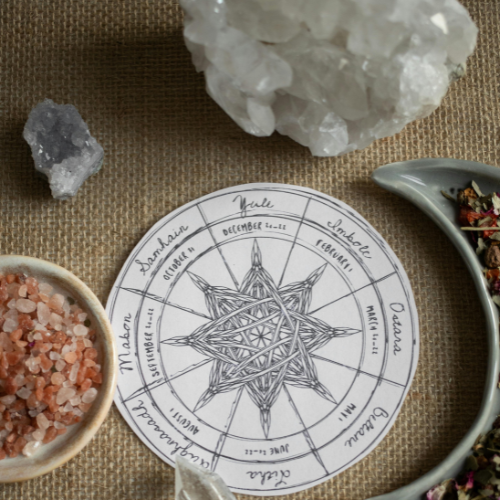
What is the Wheel of the Year?

The Wheel of the Year represents the cyclical nature of the seasons and their associated spiritual significance. It consists of eight festivals/ celebrations or sabbats, which mark the changes in seasons and /or solar events. These festivals celebrate the Earth’s natural cycles and are rooted in ancient European pagan traditions.

What are the Sabbats?

Solar Festivals (based on solstices and equinoxes):

  • Yule (Winter Solstice)

  • Ostara (Spring Equinox)

  • Litha (Summer Solstice)

  • Mabon (Autumn Equinox)

Fire Festivals (cross-quarter days, roughly midway between the solstices and equinoxes):

  • Imbolc (beginning of spring)

  • Beltane (start of summer)

  • Lughnasadh or Lammas (first harvest)

  • Samhain (end of harvest, beginning of winter)

Where Does the Wheel of the Year Come From?

The Wheel of the Year draws from pre-Christian European traditions, particularly Celtic and Germanic festivals, as well as Norse mythology, and popularized in modern times by the Wiccan movement in the mid-20th century. The Wheel of the Year could be seen as a spiritual framework that honours the cycles of nature.

Over the past year it has become even more popular, which is wonderful to see, if those who teach about it are also honouring it as a part of their lifestyle.

As with everything, it is important to do your own research, take what resonates with you, and be discerning in regard to teachers and guides.

Who Celebrates the Sabbats?

The Sabbats are celebrated in modern paganism, particularly Wiccans and Druids. However, people from different spiritual backgrounds, including those interested in nature-based spirituality, often observe these festivals as well. You do not have to have any particular belief system to learn more about seasonal and cyclical living.

How Can We Celebrate Each Sabbat?

  • Yule (Winter Solstice)

Light candles to honor the return of the sun.

Decorate with evergreens, holly, and mistletoe.

Exchange gifts or feast with family.

  • Imbolc

Light candles or fires to honor the growing light.

Cleanse and bless your home for the coming spring.

Celebrate creativity or honour Goddess Brigid.

  • Ostara (Spring Equinox)

Decorate eggs as symbols of fertility and renewal.

Plant seeds to honour new growth.

Celebrate balance, as day and night are equal.

  • Beltane

Dance around a Maypole to honor fertility and abundance.

Light bonfires to celebrate life and passion.

Decorate with flowers and greenery.

  • Litha (Summer Solstice)

Celebrate the longest day of the year with outdoor gatherings.

Light candles or a fire to honour the sun's power.

Create flower crowns or sun-inspired crafts.

  • Lughnasadh (Lammas)

Bake bread or other foods from the first harvest.

Host a feast to celebrate abundance.

Offer gratitude for the Earth’s bounty.

  • Mabon (Autumn Equinox)

Celebrate balance as day and night are equal.

Decorate with autumn colors and seasonal produce.

Reflect on gratitude and give thanks for the harvest.

  • Samhain

Honour ancestors and loved ones who have passed.

Light candles or carve pumpkins to guide spirits.

Reflect on endings and prepare for the winter ahead.

Hopefully this gave you some useful information about the Wheel of the Year and seasonal living.

Of course, each sabbat can be personalized based on individual traditions, creativity, and connection to nature. Enjoy!

Workshop Dates

Interested in learning more, combined with Yoga and Holistic wellbeing?

Join us for a Sacred Seasons Workshop or the Seasonal Living Course.

The workshops can also be joined online, but the creative activities will require you to purchase your own equipment.

Imbolc 8th and 22nd February

Ostara 22nd March

Beltane 3rd May

Litha 28th June

Lughnasadh 2nd August

Mabon 20th September

Samhain 1st November

Yule 20th December

Sacred Seasons: Seasonal Living Course details here.

More about... Lunar New Year!

What is Lunar New Year?

Lunar New Year marks the beginning of a new year based on the lunisolar calendar, which is tied to the cycles of the moon.

It is one of the most important holidays in many East and Southeast Asian cultures, symbolizing renewal, family reunion, and the ushering in of good luck and fortune.


Is it the same as Chinese New Year?

Lunar New Year and Chinese New Year overlap but aren't exactly the same.

Chinese New Year is one version of the Lunar New Year and is the most widely recognized.

Other cultures, like Vietnamese and Korean, celebrate Lunar New Year with their own traditions and customs.

When is Lunar New Year, and how long does it last?

Lunar New Year usually falls between January 21 and February 20, depending on the lunar calendar. In 2025, it begins on Wednesday January 29.
The celebration traditionally lasts 15 days in Chinese culture, ending with the Lantern Festival.

How do people celebrate it?

· Family reunions: Families gather for big meals,

· Cleaning and decorating: Homes are cleaned to sweep away bad luck and decorated with red items (for good luck).

· Food: Traditional foods include dumplings, rice cakes, noodles, and spring rolls. Each has symbolic meaning, like prosperity and long life.

· Red envelopes: Gifts of money in red envelopes are given for good fortune.

· Lion/dragon dances and firecrackers: These are used to ward off evil spirits.

· Visiting relatives and paying respects to ancestors.

Do you have to be a certain religion or culture to celebrate?

No, anyone can celebrate Lunar New Year!

While the traditions are rooted in specific cultures and histories, the spirit of renewal, family, and welcoming good fortune is universal.


What does the moon have to do with Lunar New Year?

The timing of Lunar New Year is based on the lunar calendar, which follows the cycles of the moon.

The holiday begins on the new moon and lasts until the full moon 15 days later.

The moon’s phases are central to the lunisolar calendar used to calculate the date.


Yoga for Lunar New Year

You might like to explore shapes and sequences that incorporate Moon Salutation (Chandra Namaskar).

Grounding shapes and sequences including Tadasana, Warriors, and Tree Pose.

New moons offer us time to rest and reflect - why not explore some meditation, mindfulness or even practice a Yoga Nidra.

Lunar New Year & New Moon Meditation

Head over to Yoga Borne YouTube, or simply click the here to listen to our mindful meditation in honour of Lunar New Year and the first new moon of 2025.

Wishing you a year ahead of health, happiness and abundance!

More about... Winter Solstice & Yuletide

What is the Winter Solstice?

The Winter Solstice is the shortest day and longest night of the year.

Although it marks the official start of Winter in the Northern Hemisphere and occurs when the Earth's tilt is farthest from the sun, it is in contrast a day that reminds us Spring is lingering in the distance.

It is a time of renewal and reflection, symbolizing the return of light as days begin to grow longer after the Winter Solstice.

When is the Winter Solstice?

The Winter Solstice typically occurs between December 20 and 23, depending on the Earth's orbit.

In 2024, it will occur on December 21.

The energy of the solstice will be palpable however, before and after this date. Yuletide or Yule (more about this below), is a celebration which spans 12 days.

Why is it also called Yule?

Yule originates from ancient Norse and Germanic pagan traditions.

It was celebrated as a festival honouring the rebirth of the sun and light during the darkest part of the year. Many Yule traditions, such as the burning of the Yule log, were incorporated into modern winter holidays like Christmas.

Goddesses of Winter Solstice

In many pagan traditions, the Winter Solstice honors goddesses associated with light, rebirth, and transformation. For example:

  • Freyja (Norse goddess of love and renewal).

  • Demeter (Greek goddess of agriculture, symbolizing the return of life after winter).

  • The Great Mother or Earth Goddess, embodying the cycle of death and rebirth.#


The Winter Solstice represents:

Rebirth - The return of the sun and longer days.

Inner Reflection - A time to pause, reflect on the past year, and set intentions for renewal.

Hope and Resilience - A reminder that even in darkness, light will return.

Spiritual Connection - Deepening your relationship with nature and the cycles of life.

Yule emphasizes:

Connection to Nature - Honoring the Earth’s cycles.

Celebration of Light - Welcoming back the sun’s strength and vitality.

Rituals for Winter Solstice and Yule

  • Burning a Yule Log

Choose a log, decorate it with greenery, and burn it in a fireplace or outdoor fire. Write down wishes or intentions and toss them into the fire.

  • Candle Ritual

Light candles to represent the return of the sun and invite light into your life. Use white, red, and green candles for Yule symbolism.

  • Meditation and Reflection

Reflect on the year’s lessons and set intentions for the future. Journaling during this time can be especially powerful.

  • Decorate with Nature

Use evergreen branches, holly, mistletoe, and pinecones to symbolize life, fertility, and renewal.

  • Feast and Gratitude

Share a meal with loved ones and express gratitude for the blessings of the year.

  • Create a Winter Altar

Include symbols of the sun (gold ornaments, candles), evergreen plants, and crystals like citrine or garnet.

  • Walk in Nature

Take a quiet walk in the woods or a nearby park to connect with the stillness and beauty of winter.

Words and Affirmations for Winter Solstice and Yule

"I honour the darkness and welcome the light."

"With every new dawn, I grow stronger and brighter."

"I release the past and embrace new beginnings."

"I am grounded in nature’s cycles of renewal and transformation."

"The light within me shines brightly, even in the darkest of times."

Meditation for Winter Solstice

Head over to Yoga Borne YouTube for a FREE Winter Solstice Meditation - click here.

Sacred Seasons: Seasonal Living Course

Interested in seasonal living living, sacred cycles, the Wheel of the Year?

Take a look at our Sacred Seasons Course for 2025.

Each seasonal Sabbat (celebration) will see us join for a workshop including Yoga, holistic wellbeing, information about the Sabbat, and crafting / creating something to take home.

Each workshop can be purchased individually, or purchase the whole course and create your own Grimoire / Book of Shadows for the year, that you can continue to add to.

Purchasing the whole course will also save you £40, and encourage you to commit to this self care nd nourishing time for yourself each month.

More information about the Sacred Seasons Course - click here.

Each workshop is also available to purchase individually via the YB online shop - click here.

More about... Yoga Nidra!

Yoga Nidra, often referred to as "yogic sleep," is a guided meditation practice designed to bring about deep physical, mental, and emotional relaxation.

It is a state between wakefulness and sleep where practitioners are guided through stages of relaxation, body awareness, and conscious intention.

The practice helps access the subconscious mind and promotes healing and self-awareness.


Yoga Nidra, as a structured practice, was popularized by Swami Satyananda Saraswati in the mid-20th century.

He developed it based on ancient tantric practices, particularly those involving Nyasa, a ritual where mantras are mentally placed on different parts of the body.

Swami Satyananda refined and adapted these techniques for modern use.

What Are the Different Types of Yoga Nidra?

While Yoga Nidra does not have rigidly classified "types," variations in approach are shaped by the intention and method of the practice.

Key variations include:

1. Satyananda Yoga Nidra:

Developed by Swami Satyananda Saraswati.

A structured and systematic practice including body scan, breath awareness, and visualization.

2. iRest (Integrative Restoration):

Created by Richard Miller.

Emphasizes psychological integration and healing, often used in therapeutic settings like PTSD recovery.

3. Tantric Yoga Nidra:

Based on ancient tantric traditions.

Focuses on deeper spiritual practices and the awakening of consciousness.

4. Modern Yoga Nidra:

Used in wellness settings, emphasizing relaxation, stress relief, or creative visualization.

What Are the Different Elements of Yoga Nidra?

Yoga Nidra typically involves the following elements:

1. Preparation.

Lying in a comfortable position (usually Savasana) and setting up a conducive environment.

2. Sankalpa (Intention).

A positive, heartfelt resolution or intention to guide the practice and life.

3. Body Scan.

Bringing awareness to different parts of the body systematically.

4. Breath Awareness.

Observing natural breath patterns for relaxation.

5. Sensing Opposites.

Exploring contrasting sensations like heaviness and lightness, heat and cold.

6. Visualization.

Guided imagery to evoke specific feelings or states of mind.

7. Integration.

Gradual return to wakefulness with a sense of grounding and awareness.

What Is a Sankalpa?

A sankalpa is a short, positive statement or resolution made during Yoga Nidra.

It reflects a deeply personal goal or affirmation, such as "I am calm and centered" or "I live with purpose and clarity."

It is repeated mentally at the start and end of the practice, aiming to plant a seed for transformation in the subconscious mind.

Benefits of Yoga Nidra.

Yoga Nidra offers numerous physical, mental, and emotional benefits.

Stress Reduction: Activates the parasympathetic nervous system, reducing cortisol levels.

Improved Sleep: Aids those with insomnia by promoting deep relaxation.

Mental Clarity: Enhances focus and cognitive function.

Emotional Healing: Helps process trauma, anxiety, and depression.

Physical Relaxation: Relieves tension and enhances recovery.

Spiritual Growth: Facilitates self-awareness and connection with inner self.

Who Can Practice Yoga Nidra?

Yoga Nidra is suitable for almost everyone, including:

People with stress, anxiety, or sleep issues.

Individuals recovering from physical or emotional trauma.

Beginners in meditation who find sitting practices challenging.

Advanced practitioners seeking deeper self-awareness.

Children and older adults (with modifications as needed).

Who Can Teach Yoga Nidra?

Here at Yoga Borne, we believe that teachers should be qualified and passionate about anything they offer, and our Yoga Nidra class is taught by speciality teachers.

Teachers should also have empathy and the ability to create welcoming, nurturing and inclusive spaces.

Are There Any Contraindications to Yoga Nidra?

While Yoga Nidra is generally safe, certain considerations should be kept in mind:

Deep Trauma: People with unresolved trauma may experience intense emotions; they should practice under a trained professional.

Severe Depression: Some individuals may feel overwhelmed by introspection.

Epilepsy: Avoid practices with rapid visualization or intense sensory triggers, as these may provoke seizures.

Discomfort in Lying Down: Modifications may be needed for those with physical limitations.

We always recommend consulting a healthcare professional if uncertain about practicing any form of Yoga or holistic wellbeing.


YB Yoga Nidra begins again for Autumn / Winter on Sunday 24th November 2024 8-8:30pm.

Sunday evening is the perfect time to snuggle down at home and enjoy this deeply relaxing practice, led my Studio Owner, Karine.

Book via the Glofox app or YB website booking page.

Hunters Moon: October 2024

The Hunters Moon.

The October full moon gains its name from a time when ancient communities would hunt game to store food for the winter months ahead. It is also a time when animals, and humans, may be hunting and gathering in preparation for the colder and darker months ahead.

It is a time of preparation, reflection, and acknowledging the shift in seasons as the Earth moves toward Winter.

The Hunter’s Moon represents a time of gathering resources, completing projects, and preparing for the coming months.

It symbolizes a moment to reflect on our achievements from the past months, and prepare for what lies ahead.

This moons alignment in the astrological sign of Aries carries a powerful energy associated with action, progress, and determination.

BUT, as the season of Autumn asks us to seek balance and walk the middle path, we should be mindful of action and reaction, tempering this fiery time with grounding earth energies, and the peaceful flow of the water element, symbolic of Winter.

Full Moon in Aries.

The Hunter’s Moon occurs in the zodiac sign of Aries.

Aries is a fire sign associated with passion, courage, and leadership.

This connection enhances the intensity of the full moon, perhaps encouraging us to take action, make bold decisions, and embrace our personal power.

The Aries influence makes it a time to push forward with confidence and embrace self-discovery.

The ram of Aries almost beckons us forward to move through the obstacles in our way!

Ruling Planet Mars.

Aries is ruled by the planet Mars, symbolizing drive, ambition, and almost a warlike energy.

Mars amplifies the active, fiery nature of the Hunter’s Moon, urging us to channel inner strength and direct energy toward our goals.

This connection calls for boldness but also warns of potential impatience or conflict, advising balance between assertiveness and mindfulness.

Having moved through a previous water element full moon in September, and heading into the grounding energy of Taurus after this full moon, we are again reminded to seek balance.

Can we be assertive and step into our power, but still show compassion and empathy?

Can we take bold steps forward, but balance this with rest and reflection?

Self-Reflection and Journaling Prompts.

1. What have I accomplished so far this year that I am proud of?

2. What old habits or thought patterns do I need to release to move forward?

3. What fears or doubts are holding me back from embracing my personal power?

4. What bold steps can I take toward my goals during this phase of the moon?

5. How can I balance my need for independence with maintaining harmony in my relationships?


Yoga to Honour a Full Moon.

Practicing yoga during a full moon can be a powerful way to align with lunar energy.

Certain poses may encourage introspection and balance:

1. Moon Salutation (Chandra Namaskar): A calming flow sequence that balances the solar energy of Sun Salutations.

2. Child’s Pose (Balasana): Offers a moment of surrender and reflection.

3. Goddess Pose (Utkata Konasana): Encourages empowerment and grounding.

6. Savasana: Final relaxation pose to integrate the energy of the full moon and allow for deep contemplation.

Full Moon Blessings!

Friday 13th - What's the story?

The superstition surrounding Friday the 13th is relatively modern, emerging mainly in the late 19th and early 20th centuries.

The combination of Friday and the number 13 both carried negative associations, but when combined, they gained a reputation for being particularly unlucky!

Friday has been seen as unlucky in many cultures because of its association with the crucifixion of Jesus (believed to have happened on a Friday) and early religious traditions discouraging work or business on Fridays.

The number 13 has long been considered unlucky. In many Western cultures, 12 is seen as a number representing completeness (12 months, 12 apostles, 12 zodiac signs, etc.), and 13 is thought to disrupt this balance. The origins of this negative perception could stem from early religious beliefs, Norse mythology, and numerology.

The combination of these two elements, Friday and the number 13, is thought to have solidified its reputation as an unlucky day by the late 19th century.

Friday 13th - Connection to Women & the Divine Feminine.

Historically, Friday the 13th was linked to the feminine and sacred femininity. In ancient traditions, the number 13 was connected to lunar cycles.

The moon, with its 13 cycles in a year, was historically aligned with the feminine, fertility, and nature’s cycles.

Many early goddess-worshiping cultures viewed the number 13 as a symbol of femininity and rebirth.

Friday was considered sacred to many goddesses, including Freya, the Norse goddess of love, fertility, and war. In some traditions, Friday was known as Freya’s day.

The connection between the divine feminine, fertility, and Friday goes back to ancient times, before patriarchy redefined these associations.

How Can We Honour This Connection?

To honour the connection between Friday the 13th and the divine feminine, we can:

  • Celebrate cycles: Recognize the lunar and menstrual cycles, and honor feminine energies, nurturing, and intuition.

  • Reflect and rest: Embrace rituals that focus on self-care, reflection, and meditation.

  • Practice rituals dedicated to goddesses: Offer prayers or ceremonies to goddesses like Freya, Isis, or other divine feminine figures.

  • Connect with nature: Engage in rituals that focus on the earth and its cycles, such as gardening, moon bathing, or meditating outdoors.

  • Embrace creativity and community: Host gatherings for women or sacred circles that celebrate feminine creativity, nurturing, and power.

We are delighted to have introduced “Women Gather” to the studio and online community.

This is a beautiful monthly offering honouring the divine feminine that resides within us all. Taking inspiration from areas such as the lunar cycle, nature and seasonal living.

You can join us for The Hunters Moon Edition on Tuesday 15th October. For more information and booking, just click here.

Or get super snuggly with The Wintering Edition on Tuesday 3rd December. For more information and booking, just click here.

How Patriarchy Changed Friday the 13th.

The shift in perception of Friday the 13th from a day of feminine reverence to one of superstition can be traced back to patriarchal religious movements.

As patriarchal societies emerged, goddess-centric traditions were replaced by male-dominated religious systems, especially with the rise of Christianity. The divine feminine, once celebrated, was suppressed.

The number 13, linked to lunar cycles and femininity, became associated with bad luck. Similarly, Friday’s association with goddesses was rebranded as a day of misfortune.

Why Are Some People Suspicious on Friday the 13th?

The modern superstition surrounding Friday the 13th stems from the historical fear of the number 13 and negative associations with Fridays. Some contributing factors include:

  • The Last Supper: At Jesus' Last Supper, there were 13 people present, and Judas, who betrayed Jesus, was the 13th guest.

  • The Templars: On Friday, October 13, 1307, King Philip IV of France ordered the arrest of the Knights Templar, further associating this date with bad luck.

  • Fear of 13: Known as triskaidekaphobia, fear of the number 13 has deep roots in many cultures.

Who Celebrates Friday the 13th?

In modern times, many people and groups have reclaimed Friday the 13th as a day to celebrate feminine power, creativity, and spirituality:

Wiccans and Pagans: Some modern Pagans and Wiccans view Friday the 13th as a day to honor the Goddess and engage in rituals celebrating femininity and the moon’s cycles.

Feminist groups: Feminist communities may reclaim the day as a symbol of empowerment, emphasizing the historical connection between the number 13, the feminine, and ancient goddess traditions.

Rituals for Friday the 13th.

Here are some rituals that you might like to explore:

  • Moon rituals: Since the number 13 is linked to lunar cycles, this day is ideal for moon rituals, including intention-setting, cleansing, and meditation.

  • Goddess invocation: Many people invoke goddesses such as Freya, Artemis, or Hecate in ceremonies or prayers, asking for guidance or protection.

  • Healing rituals: Engage in self-care practices such as herbal baths, energy work, and meditative rituals to honour your body and spirit.

  • Group rituals: Gather with others in a sacred circle to honour the collective feminine energy, share stories, blessings, support and love.

Head over to Yoga Borne YouTube to listen to a short mindful meditation practice in honour of Friday 13th.

Happy Friday 13th, friends!

AN INTRODUCTION TO YIN YOGA

We are delighted to have recently introduced a class dedicated to the style of Yin Yoga.

So we thought, why not write a blog post and give you the lowdown on this fabulous practice!

What is Yin Yoga?

Yin Yoga is a slow-paced style of Yoga where poses are held for extended periods, typically 3-5 minutes or longer. It focuses on stretching and targeting the connective tissues, such as ligaments, tendons, and fascia, rather than just the muscles. This practice aims to enhance circulation in the joints and improve flexibility.

What is Yin and Yang?

Yin and Yang are fundamental concepts in Chinese philosophy, culture and Traditional Chinese Medicine. They describe how seemingly opposite forces are interconnected and interdependent in the natural world. Yin represents qualities such as darkness, passivity, femininity, and cold, while Yang symbolizes light, activity, masculinity, and heat. Together, they create a dynamic balance.

Where does Yin Yoga originate from?

Yin Yoga as a distinct practice was developed in the late 20th century, drawing from ancient Chinese Taoist principles and modern yoga practices. It was popularized by Paul Grilley and Sarah Powers. Paul Grilley was inspired by Paulie Zink, a martial artist and Taoist yoga teacher.

What are the principles of Yin Yoga?

The core principles of Yin Yoga include:

1. Find Your Edge: Stretching to a point of mild to moderate sensation, not pain.

2. Hold the Pose: Staying in the posture for several minutes.

3. Be Still: Encouraging relaxation and stillness of the body and mind while holding the pose.

Yin Yoga and Taoism

Yin Yoga is deeply influenced by Taoist philosophy, which emphasizes living in harmony with the Tao (the fundamental nature of the universe). It aligns with the Taoist idea of balance and flow, focusing on the passive (Yin) aspects of yoga as a complement to the more active (Yang) styles of practice.


Yin Yoga and nature / the seasons

Yin Yoga connects with the rhythms of nature and the changing seasons. Teachers and practitioners often align their practice with seasonal energies, for example, focusing on restorative poses during winter (a Yin season) and more energizing poses during summer (a Yang season).

Each season also represents a different element, organ, emotion and much more according to Yin Yoga and Traditional Chinese Medicine.

Who can practice Yin Yoga?

Everyone! Yin Yoga is accessible to people of all ages and fitness levels. It’s particularly beneficial for those looking to increase flexibility, improve joint health, and reduce stress. However, if you are pregnant or have any medical conditions or injuries you should consult with a healthcare professional and speak to us of course.

Yin Yoga Sequence

Find below a Yin Yoga sequence that you might like to try!

If you are practicing without a teacher present, please take it slowly and mindfully, and listen to the boundaries of the body and mind carefully and intuitively.

Enjoy!

1. Sukhasana (2-5 minutes): Arrive and ground, set an intention (optional).

2. Caterpillar Pose (2-5 minutes): Sit with legs extended forward, fold over your legs, letting the spine round.

3. Butterfly Pose (2-5 minutes): Sit with soles of feet together, allowing knees to fall apart. Fold forward, relaxing the spine.

4. Dragon Pose (2-5 minutes per side): From hands and knees, step one foot forward into a low lunge. Allow the hips to sink.

4. Sphinx Pose (2-5 minutes): Lie on your stomach, prop yourself up on your forearms, and relax your lower back.

5. Child’s Pose (2-5 minutes): Sit the seat to the heels, knees wide, arms reach forward.

6. Sukhasana (2-5 minutes): Reconnect to body, intention and breath.

7. Constructive Rest (2-5 minutes): Feet to floor and wide, knees knock in, spine to earth.

8. Reclining Twist (2-5 minutes per side): Draw knees to the chest, then let them fall across your body. Keep upper back to the earth, take arms wide.

9. Savasana (5-10 minutes): Lie flat on your back with arms and legs extended, relax completely.

Yin Yoga is a meditative and slow-paced practice that targets deep connective tissues. Rooted in Taoist philosophy, it emphasizes balance and stillness, making it complementary to more dynamic yoga styles. It aligns with natural rhythms and can be adapted to suit different seasons.

Yin Yoga is often confused with Restorative Yoga, and despite there being a few cross-overs in the shapes, the 2 practices are very different.

We always recommend that you attend classes with teachers who are specially qualified in specific styles and have the knowledge and experience required to create and curate the class. This is for your health and safety, and to ensure that your class and experience is a true reflection of the style / lineage of Yoga, and as enjoyable as possible!

We have multiple qualified Yin Yoga teachers at the studio, and this class will be taught and covered by them.

You can book the class via your Glofox app, or head to the website booking page by clicking here.

Enjoy your practice!

We also offer regular Yin Yoga Workshops - our next one is coming up in September 2024.

SUMMER SOLSTICE

What is Summer Solstice?

The Summer Solstice is the moment during the year when the Sun reaches its highest position in the sky as seen from the North or South Pole. This event marks the longest day and the shortest night of the year.

When is Summer Solstice?

In the Northern Hemisphere, the Summer Solstice typically occurs around June 20th to 22nd. In the Southern Hemisphere, it occurs around December 20th to 23rd.

How is Summer Solstice Celebrated?

The Summer Solstice is celebrated in various ways around the world, often with festivals, rituals, and gatherings. Common celebrations include:

  • Bonfires and Fire Festivals: Fire is a significant symbol of the Sun's power and is used in many celebrations.

  • Music and Dancing: Many cultures incorporate music, dance, and folk customs.

  • Feasting: Sharing meals with family and community.

  • Nature Activities: Spending time outdoors, often in nature, to connect with the Earth.

Where is Summer Solstice Celebrated?

The Summer Solstice is celebrated globally, with notable events in places like:

  • Stonehenge, England: Thousands gather to witness the sunrise.

  • Sweden: Celebrated as Midsummer with maypole dancing and feasts.

  • Latvia and Lithuania: Known as Jāņi and Joninės, marked by singing, dancing, and bonfires.

  • United States: Various festivals, including in places like New York City and Santa Barbara, California.

Rituals for Summer Solstice

Rituals for the Summer Solstice can include:

  • Creating Altars: Using flowers, herbs, and symbols of the Sun.

  • Meditation and Reflection: Focusing on personal growth and renewal.

  • Sun Salutations: A series of yoga poses to honor the Sun.

  • Nature Walks: To connect with the environment.

  • Fire Rituals: Lighting candles or bonfires to celebrate the Sun's energy.

3 Yoga Asanas for Summer Solstice

  1. Surya Namaskar (Sun Salutation): A series of 12 poses that honor the Sun.

  2. Trikonasana (Triangle Pose): Enhances balance and energy flow.

  3. Ustrasana (Camel Pose): Opens the heart and energizes the body.

Summary

The Summer Solstice is a time of celebration, reflection, and connection with nature. It holds cultural, spiritual, and ecological significance for many people around the world, who honour it through various rituals, festivals, and practices.

Wishing you health, wealth and happiness for the next part of the year!

CELEBRATE SUMEMR WITH YOGA BORNE

FREE Yoga in the Park

10 weeks from Monday 24th June.

6-7pm

Meet on the Bowling Green.

Bring your own mat.

DONATION BASED Yoga in the Park

Every other week from 7th July.

11:15am-12pm

Suggested donation £5 per person.

Bring your own mat.

For more information click here.

SUMMER Yoga Retreat Day

Slow flow, embodied movement, Yin Yoga, delicious vegan lunch, crystal healing, optional wild swimming. All in a beautiful rural location less than 1 hour from Birmingham.

LAST 2 SPACES AVAILABLE!

For more information & booking click here.

RECONNECTING WITH NATURE: THE ESSENCE OF WELLBEING

In a world buzzing with technology and urban living, the call to reconnect with nature grows louder each day.

As we navigate through the complexities of modern life, finding solace in the tranquillity of the outdoors becomes essential for our overall wellbeing.

At Yoga Borne, we recognise the profound benefits that nature bestows upon us, and we are committed to integrating its healing essence into our practices and community events.

After all, we are passionate about our pillars of compassion, connection, and community; it’s who we are.


The benefits of nature for wellbeing are supported by a wealth of scientific evidence, highlighting the profound impact that spending time outdoors has on our mental, physical, and emotional wellbeing.

Research conducted by the University of Exeter Medical School revealed that just two hours of outdoor time per week is associated with a significant increase in overall health and wellbeing.


Nature provides a sanctuary from the stresses of modern life, offering a respite for our overstimulated minds and weary souls. The natural environment stimulates our senses.

Particularly around this time of year, you can step outside and hear birds tweeting to one another, and growing leaves rustling, feel the sun shining down or the gentle patter of rain as we get caught in the April showers.

Engaging with nature promotes mindfulness, allowing us to fully immerse ourselves in the present moment and cultivate a deep connection with our surroundings.

Moreover, exposure to natural light boosts our mood and regulates our circadian rhythm, leading to better sleep quality and increased energy levels.

By prioritising time outdoors, we can harness the healing power of nature to nurture our bodies, soothe our minds, and rejuvenate our spirits.


With that in mind, Yoga Borne has a number of April nature based offerings, beginning with Earth Day Yoga.

As we celebrate the beauty and abundance of our planet, we invite you to join us for a special

outdoor Yoga session in Cotteridge Park, Birmingham.

Led by our studio owner, Karine, this 45-minute beginner-friendly practice will immerse you in the serenity of nature, allowing you to connect deeply with your body, mind, and surroundings. Following the practice, you’ll have the opportunity to unwind and socialise down at ‘The Shed’ with a cup of tea, fostering a further sense of connection and community.

For further details, head to https://fb.me/e/4p2mGjHTG

Our commitment to nature and wellbeing extends beyond Earth Day.

Why not join the YB outdoor swimming group, where you can take a dip in the revitalising waters of Birmingham’s surrounding areas.

Cold water swimming, known for its myriad health benefits, offers a unique opportunity for mindfulness, increased immunity, decreased inflammation, and a boost in self-esteem.


Join us as we explore the picturesque outdoor swimming spots less than an hour from Birmingham, embracing the therapeutic power of nature and enjoying the company of like-minded souls.

To join the Whatsapp group and receive information, head to https://www.yogaborne.com/wild-swimming


March saw us connect to nature during our Spring Awakening Day Retreat. Watch this space for our Summer Day Retreat - details coming soon!

Let’s embark on a journey of self-discovery and connection, guided by the gentle whispers of the wind and the rhythmic flow of the water.

Are you in?..