
I have been thinking a lot about Ahimsa lately.
In a world that can seem very heavy and very unkind sometimes, Ahimsa can be something that we can think about as Yogis, share as teachers, and most importantly live by as humans.
Ahimsa is a Sanskrit (the language of Yoga), word that means non-violence or non harm.
It’s the practice of not causing harm in thought, word, or action.
In Yogic philosophy, ahimsa is the first Yama (ethical foundation) in Patanjali’s Yoga Sutras. That placement matters: it’s the ground everything else stands on.
Violence can be loud (war, cruelty, abuse) or subtle (self-criticism, neglect, indifference, disrespect, unconscious consumption). Ahimsa doesn’t begin with fixing the world, it begins with how you treat yourself, and each other.
Ahimsa asks us to notice all of it, but it starts with you…
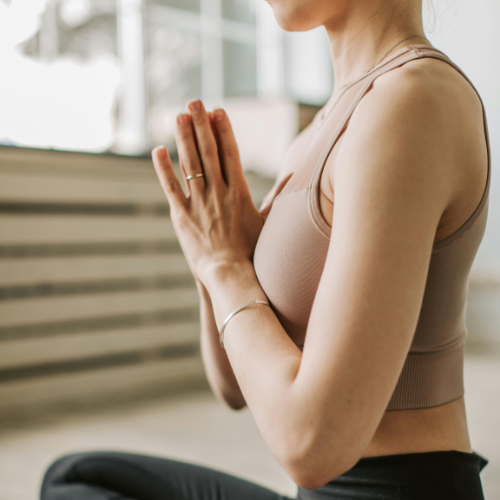
You might take time to consider, or even journal:
How do you talk to yourself when you fail?
Do you override your body’s signals to rest?
Do you shame yourself into productivity?
Do you abandon your needs to be “good” or “liked”?

Practicing ahimsa toward yourself means:
Choosing honesty over self-attack.
Listening instead of forcing.
Letting yourself be human.
Ahimsa on your Yoga mat can look like:
Not pushing through pain to “prove” something.
Modifying without shame or judgement.
Resting when your nervous system asks for it.
Letting go of comparison.
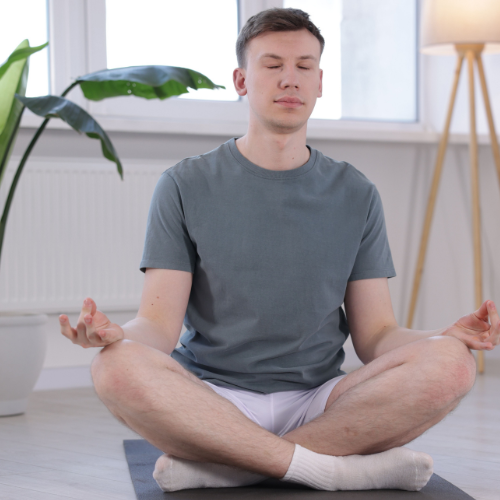
Ahimsa offers a crucial lesson - strength doesn’t require violence. Growth doesn’t require force.
That lesson is portable. Off the mat, ahimsa becomes a daily inquiry: “Is this causing harm—to me, to others, to the planet?”
It doesn’t mean perfection or passivity. Sometimes non-violence requires firm boundaries, hard conversations, or saying no.
Practicing Ahimsa in life can look like:
Speaking truth without cruelty.
Disagreeing without dehumanizing.
Setting boundaries without guilt.
Consuming more consciously.
Pausing before reacting.
It’s not about being “nice.” It’s about being aware!
Simple ideas to practice ahimsa - small, real, human ways:
Replace self-criticism with curiosity.
Eat, move, and rest in ways that respect your body.
Listen to someone without planning your response.
Stop scrolling when your nervous system feels fried.
Choose words that don’t escalate harm.
Forgive yourself faster.
Make one choice a day that reduces harm—even slightly.

Ahimsa is practiced in moments, not grand gestures.
Why does it matter so much right now?
We are unfortunately living in a time of chronic stress and nervous-system overload, polarization and dehumanization, environmental harm and much more.
Violence today isn’t only physical—it’s systemic, emotional, digital, and internalized.
Practicing ahimsa can interrupt that cycle.
When you practice non-violence you stop passing pain forward, you slow reactivity, you create space for empathy and you model another way of being.
It starts from you, and it ripples.
Ahimsa doesn’t ask us to be perfect. It also does not ask us to be passive, and should not be confused with passivity and lack of action.
It asks us to be awake and aware - to ourselves, and the world around us.

When there’s violence, political chaos, injustice, fear—practicing ahimsa doesn’t mean pretending everything is fine or staying soft at all costs.
It means learning how not to let fear turn you into something you don’t want to become.
Start with nervous-system Ahimsa:
Limit doom-scrolling.
Taking breaks from constant news without guilt.
Breathing before reacting.
Letting yourself grieve what’s happening.
Ahimsa allows for:
Clear boundaries.
Saying “this is not okay.”
Protest, resistance, and refusal.
Anger that doesn’t turn into hatred.
The key question might be - “can I oppose harm without becoming harmful myself?”
That’s incredibly powerful—and incredibly difficult.
When life feels overwhelming and scary, how you show up in small relationships matters deeply.
Ahimsa is a long game, violence feels fast. Ahimsa works slowly—but it lasts.
Remember - you are allowed to protect yourself, you are allowed to be angry, you are allowed to take breaks.
Ahimsa doesn’t ask you to feel safe all the time, perhaps it more so asks you to not let fear and hate become your teacher.